Show all posts
Showing posts with label african american wealth building. Show all posts

Saturday, April 24, 2010

Love and Money Questions to Ask Your Partner

by Dr. Boyce Watkins, Finance Professor - Syracuse University

As a Finance Professor, I find it incredibly ironic that many people get married without talking about money. They talk about every kind of compatibility from emotional, to spiritual, sexual, and professional, but they seldom take the time necessary to ensure that they can tolerate the idea of sharing their financial life with a person who may not be on the same page. This problem is compounded in black relationships, where many women describe economic hurdles as one of the reasons that black women have trouble finding the right mate.


Click to read more


Sunday, November 29, 2009

Dr. Boyce Watkins: How Does Prosperity Gospel Work Anyway?

by Dr. Boyce Watkins, Syracuse University, Your Black World 

Nearly every African American knows just how important the black church is to our community. We also know about "prosperity gospel," the act of preaching about God within the context of wealth building. I admit that this form of faith is a bit odd to me. I am a Finance Professor and I become confused when my pastor talks about money more than I do. The saddest truth is that it's hard to tell the difference between a pastor and a pimp: Most pastors aren't pimps, but any pimp could be a pastor. The same skill set is required in both professions.


My father is a preacher, but he almost never preaches about money. I've never heard him asking for money on the pulpit, or mentioning that giving money to him is one of the keys to gaining access to heaven. But I don't presume that my father is right about all things, and given that I write about money on a regular basis, I have gained an appreciation for what financial resources can do to enhance your life. Also, one must be aware of the pragmatic realities of running a church: You have the building fund, bills to pay every month and any community service initiatives that the church chooses to pursue. The proper use of money can certainly enhance your ability to do God's work.


Click to read.

Wednesday, September 23, 2009

Dr Boyce Watkins: Don’t Kill Tavis Smiley Over Wells Fargo


by Dr. Boyce Watkins, Your Black World, AOL Black Voices 

When I read about the predatory lending allegations against Tavis Smiley and Wells Fargo, I wasn't surprised. Not because I feel that Tavis is some kind of crook, but because economic downturns are usually when everyone's dirty laundry gets aired out. The high flying 2000s were a decade of extravagance, overspending, easy money and troubled relationships. The party was bound to end. Smiley's party has ended with Wells Fargo, as the company has been accused of using Tavis Smiley and financial expert Kelvin Boston to convince African Americans to sign on to loans that turned out to be predatory. Neither Boston nor Smiley is willing to disclose the amount they were paid for the service, but I'm sure it wasn't chump change.
I've been open and honest in my critiques of Tavis Smiley in the past, but I give credit where it's due. I've always felt that Tavis Smiley is a man who works out of a sincere respect and appreciation for the black community. He is not out to hoodwink, swindle or hurt us, at least not deliberately. At worst, Smiley is guilty of being caught in a situation that he may not have fully understood.
Although I agree with the black community's decision to hold Tavis Smiley accountable for his actions, I want us to be cautious of going overboard in our judgments. Here are 5 things I want to say about Tavis Smiley:

Click to read.

Monday, February 16, 2009

The President Will Be Focusing on Auto Industry

President Obama has dropped the idea of appointing a single, powerful “car czar” to oversee the revamping of General Motors and Chrysler and will instead keep the politically delicate task in the hands of his most senior economic advisers, a top administration official said Sunday night.who insisted on anonymity.

The official also said that Ron Bloom, a restructuring expert who has advised the labor unions in the troubled steel and airline industries, would be named a senior adviser to Treasury on the auto crisis.

The unexpected shift comes as G.M. and Chrysler race to complete broad restructuring plans they must file with the Treasury by Tuesday. The companies’ plans are required to show progress in cutting long-term costs as a condition for keeping their loans.

The administration official said the president was reserving for himself any decision on the viability of G.M. and Chrysler, both of which came close to bankruptcy before receiving federal aid two months ago.

One of President Obama’s top advisers said Sunday that the administration had not ruled out a government-backed bankruptcy as a means to overhaul the automakers.

“We’re going to need a restructuring of these companies,” the adviser, David Axelrod, said on “Meet the Press” on NBC. He added that a turnaround of the companies would “require sacrifice not just from the auto workers but also from creditors, from shareholders and the executives who run the company.”


Click to read.

Saturday, February 14, 2009

Black Wealth: Senate Finally Passes the Stimulus

The U.S. Senate gave final approval Friday to a $787 billion recovery package that President Obama hopes will help boost an economy in freefall with a combination of government spending and tax cuts and credits.

Sen. Sherrod Brown speaks to Senate Majority Leader Harry Reid at right on the Senate floor Friday.

Sen. Sherrod Brown speaks to Senate Majority Leader Harry Reid at right on the Senate floor Friday.

Approved earlier by the House, the plan -- which went through multiple permutations as it bounced back and forth on Capitol Hill over the past week -- now goes to Obama's desk, where he plans to sign it into law by Presidents Day.

Spending in the package includes about $120 billion for infrastructure -- new projects repairing bridges, roads, government buildings and the like -- more than $100 billion for education and $30 billion on energy-related projects that Obama says will create "green jobs."

More than $212 billion goes to tax breaks for individuals and businesses, and another $267 billion is in direct spending like food stamps and unemployment benefits.

The Congressional Budget Office has predicted that the plan will create between 1 million and 3 million jobs.

Most individuals will get a $400 tax credit, and couples will get $800.

The vote by the Senate took several hours longer than a simple roll call of its 100 members generally would. Sen. Sherrod Brown, a Democrat from Ohio, attended a wake for his mother until about 8 p.m. Friday.

Voting began about 5:30 p.m. Then, the Senate chamber sat nearly empty until Brown arrived to vote about five hours later.

He was flown from Ohio to Washington on a plane provided by the White House, which said no commercial flights were available that would have allowed Brown to cast a vote and return to Ohio in time for his mother's funeral Saturday.

Click to read


Wednesday, February 4, 2009

Big Test on Stimulus for Barack Obama

A contentious debate over a "Buy American" provision in the economic stimulus package poses an early test for President Obama on both domestic politics and foreign policy.

The Senate this week is considering an $885 billion bill designed to help mend the ailing economy, which requires all "manufactured goods" purchased with stimulus money to be made in the United States. The House already has approved a narrower bill mandating the use of domestic iron and steel.

To supporters, including labor unions that helped the Democrats retake the White House last year, a "Buy American" requirement is just common sense at a time of economic crisis and rising unemployment. Factories have been hemorrhaging jobs for years; manufacturing employment is now 12.9 million, down from 17.2 million at the end of 2000. If Congress doesn't insist upon the use of U.S.-made materials, taxpayer funds could line the pockets of European or Chinese workers rather than hard-hit Americans.


Click to read.

Sunday, February 1, 2009

Black Hair Is Not a Black Business


The Black Hair industry is a multi-billion dollar industry. This industry has created other revenue generating vessels such as, conferences, schools, distribution, competitions, marketing, and even research. With an industry that is so huge and driven by the black dollar, one would expect that this industry would be under the direct control of those that make it successful, the black race. However, it is not. Though blacks still control many of the hair salons and barbershops, there is still a major disparity in many of the other businesses within this industry. Plus, recent trends have begun to emerge in the marketplace that threatens the ownership of those two entities. There is a new business model for salons, Korean-Owned and Black-Operated. This new model is growing rapidly and becoming a success among the community. While customers can continue to receive services from a familiar black stylist, the dollar ultimately goes to the Korean community.


It’s absolutely not a bad thing that Koreans are becoming fierce competitors and business owners in this black industry, so standing on the sidelines boycotting these establishments or calling for them to discontinue is a way that further perpetuates the blacks’ “right to survivorship” thinking. Blacks should not expect to be able to merely sit on a golden egg that was handed to them and not expect others to want a piece of it. The golden egg must be protected and guarded like the lion guards its kill from the hyena. Since the system we live under a capitalist system, the way a person or group rises to great wealth and sustainability is through competitive edges. Is this true? The retail segment of the black hair business is another entity that works to cipher the dollar from black community and be sent elsewhere. After research of over 800 black served beauty supply stores, we uncovered an ownership base of less than 5%. Of these same stores during a 6-month evaluation we found more than 97% of black consumers.
Is this a huge snowballing problem that should be addressed? Do blacks have the resources and opportunities within their communities but are simply not harnessing these opportunities? The problem of a low number of retail stores does not begin there. It begins at the distribution level. There is still a significant amount of black manufacturers of products but once these products leave the black manufacturers, they are placed in the hands of Korean distributors then the problem begins. Once the Korean distributors get a hold of the products they do two things: 1. They selectively distribute the products to retailers and sometimes at different prices. 2. They study the black products and soon create prototypes and begin marketing these prototypes to their huge Korean retailer base. Lucky White, CEO of Kizure Products, has boasted this as being one of her major dilemmas in her business slowdown. She is not only being competed against by other equipment manufacturers, the distributors are acting as lobbyist for her competitor.

In an industry that resulted in billions due to pioneer, Madame C.J. Walker, a black woman born into poor conditions in the early 20th century, one would expect the blueprint to this industry to be studied and executed by blacks across America but sadly this has not been the case. Why? It is not as simple as setting up shop and waiting for high profits anymore. Retail storeowners are facing many competitive obstacles such as capital, a large selection of products, and pricing. In most cases, getting an account with a Korean distributor as a Black person means you face an uphill battle. First, the distributor must approve your location before agreeing to supply your store. If they agree, now payments must be made in cash upfront with no delayed terms of payment. This is perhaps the hugest obstacle a new black storeowner faces. Then, this is a rippling effect. If distributors are consuming the capital instantly, then there is less available for the new black owner to obtain an abundant variation of products. Lastly, the pricing advantage many Korean stores are able to provide for the black consumer keeps them coming back over and over again, showing very little regard to a black storeowner down the block. This pricing advantage is also a resource for the Koreans because of the relationship they have with the Korean distributors.

However, the nail has not yet been driven into the coffin of the black lockout of their stake in this industry. I am living proof. I emotionally entered into this industry when I was thrown out of a Korean-Owned beauty supply store while I was attempting to make a huge purchase for my salon. The owner felt uncomfortable with me browsing and being selective. His frustration grew to rage so he then threatened me with a golf club eventually throwing me out of his store. Like many black men, I didn’t know of the huge lockout that took place in this industry until I had already signed a $5,000 lease for a location. My uphill battle began as distributors wanted cash and many didn’t even return my phone calls. Little did many of them know my persistence is abnormal. I took daytrips on airlines to physically walk into locations in New York and Miami until I got what I wanted. My goal was to give our community options in shopping while receiving the respect they deserved. My one location turned into three in 18 short months. Trial and error was my ally. As I learned, I perfected. Here a few things that an aspiring owner can implement.

Communicate with other owners – Find other owners willing to communicate with you in your market and even throughout the country. They are more than willing to share valuable information with you and you should do the same.

Automate the Store – In this fast-paced era, do not rely on spreadsheets and manual inventory tracking. This can slowdown your customer fulfillment process and tie up valuable time that could be used elsewhere.

Be a competitive and creative owner – Do not do what the next guy is doing, do what he isn’t. Establish store niches.
Establish Non-Competitive Clauses – Secure your market share within your mall at the least. Do not leave the gate wide open.

Manage the Cash Effectively – From your gross, pre-allocate percentages for capital expenditures, marketing, taxes, procurement, payroll, etc and have different bank accounts for each one with the monies being deposited systematically. Do not rely on self to divvy up or disburse the funds as you receive revenue.

Form Alliances Outside the Black Hair Industry – I once went to a children’s theme park with my sons and discovered that a local pizza franchise provided the pizzas for the business at a discounted rate. These opportunities exist for beauty storeowners as well. I established plenty. One place is funeral homes.


Seek Consulting – Never think you know it all. I had two beauty storeowners that acted as my mentors for the first year. I compensated them for intense assistance but for quick advice they were glad to help. Expect nothing for free. Allocate funds for this too.
Location, Location, Location – Do not pick a convenient location for you, pick a convenient location for the customer. There are moneymaking opportunities even when there is an existing beauty store. Don’t be afraid of the competition. The way you operate may be the way the customers in that market prefer.


Though I have highlighted distribution as the component needed, it is not the way to launching strategic efforts, and neither is boycotting. Building up the amount of black-owned retail stores is the first step in a strategic plan like this. The demand must first be created if a black distribution plant is to be successful. The black hair business is a cash cow but in its current state the cow is jumping over the moon with the moneybag heading to other communities.


Devin Robinson is the author of Taking it Back: How to Become a Successful Black Beauty Supply Store Owner who resides in Atlanta, GA. Visit his website athttp://www.takingitbackblack.com/.

Tuesday, July 8, 2008

Black Money: Fed Cracks down on Predatory Lenders

WASHINGTON - To prevent a repeat of the current mortgage mess, U.S. Federal Reserve Chairman Ben Bernanke said Tuesday that the central bank will issue new rules next week aimed at protecting future homebuyers from dubious lending practices.

The new rules will crack down on a range of shady lending practices that has burned many of the nation’s riskiest “subprime” borrowers — those with spotty credit or low incomes — who were hardest hit by the housing and credit debacles.

The housing, credit and financial crises have bruised the economy. Growth has slowed and employers have cut jobs every month so far this year.

In prepared remarks to a mortgage-lending forum in Arlington, Va., Bernanke said that “it is unrealistic to hope” that financial crises can be entirely eliminated, while maintaining an innovative financial system. “Nonetheless, recent experience has illustrated once again that financial instability can have serious economic costs,” he said.

Meanwhile, the Federal Reserve is also considering giving squeezed Wall Street firms more time to draw emergency loans directly from the central bank to help them overcome credit problems, Bernanke said.

In an extraordinary action, the Fed in March agreed to let investment houses go to the Fed — on a temporary basis — for a quick, overnight source of cash. Those loan privileges, which are supposed to last through mid-September, are similar to those permanently afforded to commercial banks for years.

“We are currently monitoring developments in financial markets closely and considering several options, including extending the duration of our facilities for primary dealers beyond year-end should the current unusual and exigent circumstances continue to prevail in dealer funding markets,” Bernanke said.


Monday, June 30, 2008

Black Money Tips: Ways to Get Rich


The smart way to get rich - MSN Money

Feel like taking a risk in hopes of hitting the jackpot on a rocket stock? #mediaarticle #articleBody #segment {HEIGHT: 1100px!Important}

Before you make the leap, you might want to get a grip on risk

Prices go up, prices go down, and you never know which way they're headed next. A lot of folks would say, well, that's risk. But really that's only half the picture. The other half is what you do in response.

After all, there's nothing wrong with risk itself. What's important is how you handle it. To know how to manage the risk-reward equation, you're first going to have to get a grip on what you're playing with -- and how much you can afford to lose.

It's pretty hard to talk about investment risk without falling into a lot of clichés about roller coasters and bungee jumping and being able to sleep at night. That imagery is entertaining but maybe not terribly helpful. Instead, let's start with the basics. We don't want to lose money, right?

"Obviously, negative return is risk," says Lee Schultheis, the CEO and chief investment strategist at AIP Mutual Funds in White Plains, N.Y.

Pros such as Schultheis use some pretty powerful computer-driven tools in their analysis of risk. Here are just a few of the concepts that are important to them:

  • Standard deviation, much beloved of finance professors, measures how much the results of a process tend to vary. The higher the standard deviation, the more unpredictable the results.
  • Correlation, used by those managing diversified portfolios, tells you how much two assets move together to reinforce -- or offset -- performance.
  • Value at risk, often used by hedge funds, measures the likelihood that you will lose all of your money in any time period.

All three are mathematical concepts and require some comfort with statistics to calculate -- but not to understand. Each translates the uncertainties of risk into mathematical estimates of likelihood that offer a good basis for planning.

If you have an investment with a high standard deviation, close correlation to other investments or a high value at risk, you're taking on significantly more risk. If more than one of those factors is involved, watch out.

Let's say you're thinking about doubling up an investment in technology stocks. Results in that sector are going to be erratic to begin with.

Click to Read More.

Friday, June 27, 2008

Black Money Tip: It is not Always Best to Buy a Home


This is an article explaining some reasons why you might not feel it necessary to purchase a home.  I agree.  What is also true is that there are convenience reasons that an individual may not want to buy: if you are only living in a city for a short period of time, don't want the hastle and expense (not to mention taxes) of home ownership, you have a business that is already giving you a good return or you have a great tax write-off elsewhere.  Owning a home is great, but it is more important to remember the importance of eventually owning SOMETHING.  It doesn't have to be a house. 

Real-estate agents have been pushing the virtues of homeownership since homes were invented. Or since real-estate agents were invented, anyway. Paying a mortgage, they insist, is a can't-miss investment (the tax breaks, the appreciation, the thrill of fixing your own roof!). Renting is for simpletons who don't like keeping their own money.


But does owning a home really trump renting? With the economy stumbling, house prices falling, and credit tightening, many housing experts are questioning the conventional wisdom. "Over the last decade, it may have been true," says W. Van Harlow, an economist at the Fidelity Research Institute. "Clearly, there are periods where [the housing market] will dominate. But give this market correction another 18 months, and it may not be true anymore."

Not so hot. The housing boom produced endless stories of homeowners getting twice what they paid for their homes. But "prices don't always go up," says Jay Butler, director of realty studies at Arizona State University. Even a boomtown like Phoenix has seen median rates of appreciation climb only 4.6 percent a year since 1981. According to a Fidelity study published this year, the return on a dollar invested in real estate in 1963 barely beat that of a low-risk treasury bill.

Click to Read More.

,,,,

Sunday, June 22, 2008

Black Money, Black Wealth: The Dangers of Debt Consolidation

Fred Harteis News Articles - Debts and debt consolidation strategies go together in the economy like peanut butter and jelly. You don't need a financial planner to comprehend the basic logic: Combining multiple payments into a single monthly check lowers interest rates and can positively impact your FICO score.

"It's easier to take on the 1,000-pound gorilla who comes to the front door as opposed to 20, 50-pound gorillas pouring in through separate doors and windows," says Boyce Watkins, author of "Financial Love-Making 101: Merge Assets With Your Partner in Ways That Feel Good," and a professor who teaches personal finance planning. "Psychologically, consolidation is very comforting."

Click to read more.

Tuesday, May 27, 2008

Getting ahead by cutting back

By John Eidson

The 1970s runaway best-seller The Millionaire Next Door laid out the results of an extensive study of how the rich in America become wealthy, and stay that way.

Contrary to popular misconception, most millionaires are not athletes, entertainers or corporate CEOs, nor did they inherit their fortunes. Most of the well-do-do don't live in mansions and don't drive luxury cars. More carry the credit cards of places like Sears and Target than those of exclusive upscale stores.

In short, most millionaires have used an incredibly simple strategy in amassing wealth: they spend less than they earn. Having learned how to get ahead by cutting back, they are living the ultimate American dream.

The good news is virtually anyone can join them, and it isn't necessary to be a doctor or other high income earner. According to no less an authority than Forbes magazine, the inescapable implication of The Millionaire Next Door is that ordinary people with nothing more than ordinary jobs can accumulate impressive nest eggs simply by learning to live beneath their means.

John Eidson is a white conservative who takes great pleasure in black success. In addition to postings on YourBlackMoney, he also occasionally posts on YourBlackPolitics.


Dr. Boyce WatkinsBlack MoneyBlack Celebrity GossipHip HopYour Black ScholarBlack TelevisionBlack LawyersBlack HistoryMoney and LoveBlack PoliticsBlack Global NewsDr. Boyce Watkins BlogBlack LoveBlack WomenBlack PowerBlack LifeBlack WritersBlack CollegeHip Hop vs. AmericaBlack MenBlack GospelBlack AdviceBlack BeautyBlack EducationBlack NewsBlack SportsBlack CelebsBlack HealthBlack ReviewsBlack FashionBlack Hair African American SpeakersBlack MediaBlack in AmericaBlack Men in AmericaBlack WomenAfrican American News

Wednesday, May 21, 2008

Save 20%-30% on gasoline costs

When my wife and I bought our Honda Accord two years ago, we did a miles-per-gallon test on our first tank of gas. We got right at 21 mpg for city driving, exactly as advertised on the window sticker.

A few months back, we heard a tip on the radio about saving gasoline. According to the report, the typical driver can save 20%-30% on gasoline simply by changing the rate at which they accelerate and brake.

Old habits are hard to change, but change them we did. We are now getting nearly 25 mpg, almost 4 miles per gallon more than our car’s rating. That translates to roughly an extra 50 miles out of each tank of gas. At today’s gasoline prices, we’re saving nearly $500 a year.

A good way to drive more efficiently is to accelerate and brake as if there is a raw egg between your foot and the pedal, pretending that the egg will break if you press the pedal too aggressively.

John Eidson is a 64 year old white conservative who takes great pleasure in black success. In addition to postings on YourBlackMoney, he also posts occasionally on YourBlackPolitics.

Friday, May 16, 2008

What I learned from Bill O'Reilly about Money


by Dr. Boyce Watkins
www.BoyceWatkins.com

I learned something about the power of money last night. I received an email from one of our readers on Your Black World, who simply said, “Bill O’Reilly is coming after you again.” I took it in and got back to what I was doing. I expected O’Reilly to make another smear attack this week, since a good terrorist always hits the target multiple times.

O’Reilly Bin Laden’s latest target was my poor chancellor, Nancy Cantor. Sending one of his goons (some call them correspondents) to the campus, Dr. Cantor was asked why she is allowing “the good name of Syracuse University to be ruined by a ‘racist’ like Boyce Watkins.” Translation: to some, a “racist” is any black person who speaks up for black people. I accept that.

O’Reilly never really came at me directly, as I and some other black scholars have refused to appear on his show. I don’t fault the ones who choose to appear, but I don’t consider a platform legitimate just because it has a few viewers. Instead, he felt that going after my chancellor and the alumni of Syracuse University would be a more reliable tactic.

I couldn’t agree with O’Reilly more, perhaps the chimp is smarter than I thought.

Our campus is in the middle of a billion dollar fund raising campaign, and I am sure there are those who are sickened by the fact that one of the most visible faculty members on campus is the subject of racial controversy. Financial theory teaches us that risk management and minimization are critical to maximizing popularity and profitability. Controversy is risk, and too much risk hurts your ability to raise money. Oprah knows this all too well, as her political moves have diminished her show’s brand and base during the past year.

As Barack Obama’s experience reminds us, race is not a comfortable conversation, even when presented in the most diplomatic fashion possible. The backlash is far greater when you are direct and honest. What’s interesting is that O’Reilly couldn’t exactly cite why he was so obsessed with me, nor could he point to any strong evidence to support his “race baiter” assertions. The mere fact that he labeled me a “race monger” was enough to get his disciples up in arms. Bill O’Reilly should change his name to Bill Oprah-Reilly, as he has an amazing ability to manipulate his minions and their small, impressionable minds.

According to Bill O’Reilly, I am using the Presidential campaign to engage in “villainous pursuits” to promote a radical agenda. Being the good and noble American that he is, his goal is to ensure that “race hustlers” like myself don’t use their “hate-filled speech” to manipulate the results of the 2008 Presidential Election. Bill O’Reilly has become Martin Luther King Jr in his fight for truth, justice and political purity. God bless him.

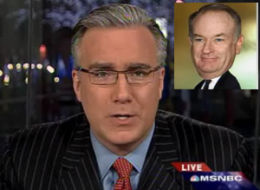
My finance lesson this week came from watching Bill O’Reilly squirm. He was boiling mad at me, and even his fellow conservatives couldn’t quite figure out why (note the confusion on the face of the silly conservative radio show host, Laura Ingraham). The reason O’Reilly had become obsessed with me and my words is because of the dirty secret exposed by MSNBC host Keith Olbermann: A group with which I am affiliated, The Your Black World Coalition, has mobilized an intense email, phone and letter writing campaign to O’Reilly’s corporate sponsors, the FCC and the producers of the show. The ultimate objective is to hold O’Reilly’s corporate sponsors accountable for supporting a man who has consistently engaged in dirty tactics to defame Jeremiah Wright, Barack Obama and other respected individuals in the black community. While O’Reilly is certainly entitled to Freedom of Speech, I won’t have him unfairly assaulting and defaming my respected colleagues, and using my money to do it. While I give O’Reilly credit for being a good financial student, he must remember that I am ultimately the professor.

In reference to my many “lies” to smear O’Reilly, Keith Olbermann asked Bill one simple question: “If that’s what Watkins said, where are the lies?” In naming Bill O’Reilly “The Worst Person in the World” for his attacks on me and the chancellor, Olbermann quoted my reference to O’Reilly’s statement about wanting to have a “lynching party” on Michelle Obama. O’Reilly speaks of lynching the potential First Lady of the United States, and then has the nerve to call others racist and unpatriotic.

Given my training in finance, I learned one thing about living in a capitalist democracy: money makes people move. O’Reilly also understands this. Money makes good people do bad things and gives bad people an excuse to do good things. Money is the reason Fox News exists, and why this form of “capitalism gone wild” has destroyed the integrity of American journalism. Money is the reason that Barack Obama went from being a non-factor to becoming a target of The O’Reilly Factor and the reason that President Bush is sweating over the price of gas.

It is the ability to acquire resources, mobilize resources and take away resources that will change this election. This election will, in turn, change the world. Race matters, there’s no question about that. But money matters much more.

Dr. Boyce Watkins is a Finance Professor at Syracuse University and author of “Financial Lovemaking 101: Merging Assets with Your Partner in Ways that Feel Good.” This book is one of the definitive guides to Love, Money and Relationships, cited in Essence Magazine, Black Enterprise and other outlets. For more information, please visit www.BoyceWatkins.com.

Monday, May 5, 2008

Black Money, Black Wealth, Black Liberation: What black people should do right now

I spoke this weekend at an Entrepreneurship boot camp for The Urban Philly Professional Network. The head of the organization created something I consider to be profound and promising. He regularly gathers the black entrepreneurs of Philadelphia for networking events, training and motivation for their endeavors. I am proud of him because he has shown a consistent commitment to two issues of critical importance in the black community: black people working together and black people engaging in the ownership of capital.

Black entrepreneurship is not just about money. It’s about LIBERATION. The easiest way for me to control another man is for him to know that I am the reason his kids get to eat every day. That man will do exactly what I tell him to do, when I tell him to do it, and how I tell him to do it. Historically, African-Americans have been consumers of products and sources of labor. We have rarely been in a position to own or control capital. This country’s empire of wealth was built without black participation, as our ancestors were unable to transfer assets to their children. We all know that. Slaves were a form of human capital from which our country’s foundation was created. Theft from the black community is in the trillions.

As a result of this legacy, nearly every inch of the financial capital base of American institutions is controlled by someone else: The media, corporate America, academic institutions, you name it. Fox News freely spouts racism because Rupert Murdock and others like him control media infrastructure. Universities earn over 1 billion dollars per year from the families of black athletes because HBCUs don’t have the capital base to compete for these players. Jeremiah Wright and Barack Obama end up with distorted images because they’ve attempted to repair their reputations by appealing to the same institutions that destroyed their images in the first place. There are few black alternatives to media and corporate America, so our messages, leadership, outcomes and incentives are typically beyond our control. The controller of capital is the controller of destiny, so the social implications of capital ownership are vast.

The legacy of disproportionate capital acquisition also breeds a mentality in those who are controlled by capital. Some might call it the slave mentality. It affects all of us, from truck drivers to college professors. The slave mentality says your sole objective for obtaining education or skill is to work for someone else. We seek to find a job, rather than create one. Even most black doctors, lawyers and college professors fall victim to this mentality, as this is the tradition for many people of color. Risk aversion in the black community is strong enough to choke a horse, and any dreams of “going at it on your own” are squashed by relatives who encourage you to take the high paying, “prestigious” position at IBM or Stanford University.

The problem with the slave/laborer mentality is that there is a huge social price being paid when one spends his/her entire life drinking from someone else’s fountain: You are not free to pursue social justice and the platform on which you stand can be taken out from under you at a second’s notice. When injustice occurs around you, you are trained to sit silently and hope for the best. You don’t dare rely on ideas like “academic freedom”, because capitalism usually trumps idealistic concepts like democracy and freedom of speech. You can speak freely as long as it is financially convenient for the organization that controls you.

When I met with the black entrepreneurs and business owners of Philadelphia, I reminded them of the significance of their contribution to Black America. Owning a business is not about making a dollar, it’s about providing a critical supplement to the work of Dr. Martin Luther King, Jr. Black Entrepreneurs aren’t just finding a source of income, they are building black institutions. I reminded them that General Motors wasn’t built in a year, and that they should be proud of the trees they’ve planted, even if they are smaller than the strong, sturdy oaks around them.
There was a time when a high ranking position in the British Empire paid a lot better than joining the American Revolution. Black Entrepreneurs are the financial Harriet Tubmans of the black community: liberating people in mind, spirit and resources.

Many of us are so “blinded by the bling” that we take our eyes off the prize. Even those with high incomes remain as vulnerable as Katrina victims, as one unfortunate event can lead you to financial ruin. High income without an understanding of wealth building, diversity of resources and long-term financial stability is a recipe for financial disaster.

An understanding of the strengths and weaknesses of capitalism is critical to any social movement in America. Socially responsible financial machinery can serve to empower and sustain movements toward justice and equality. Models of entrepreneurship should be taught to every black child in America. Children should understand the nature of revenue generation, cost minimization and how business models work. The path to liberation in a capitalist democracy goes straight through Financialville. Controlling capital means controlling lives, and it’s tough to be free without it.

Dr. Boyce Watkins is a Finance Professor at Syracuse University and founder of YourBlackWorld.com. He is also the author of Financial Lovemaking 101, the definitive guide on black love, black money and black relationships. For more information, please visit www.BoyceWatkins.com.


Monday, February 11, 2008

Dealing with the Recession the Right Way: How to be Great in 2008


By Dr. Boyce Watkins
www.BoyceWatkins.com

You may have heard from the “financial experts” on TV that the recession is coming. For lack of a better phrase, many of us might be tempted to say “no duh”. Hearing a rich person on TV tell you that hard times are on the way is like being knee deep in water and getting a rain alert from the weather man.

Most Americans knew the recession was here when they started losing their homes in the subprime lending crisis. Many others learned about the recession when they could not afford heat for their homes, health care for their families, or college tuition for their children. According to a recent Gallup poll, 50% of all Americans expect their standard of living to decline. We don’t need a Suzie Orman, Larry King or some random journalist to tell us that.

As a financial researcher, I saw the recession coming 2 years ago during my fellowship with the Center for European Economic Research. The data showed, quite clearly, that Americans were managing their money like a pack of drunken sailors. We were over spending, over borrowing, under saving and under investing. That combination is never good in the long-term. Financial chickens always come home to roost.

We weren’t exactly seeing a good example from the Federal government, who has taken the word “conservative” out of the term “Conservative Republican”. Spending on a war that cost entirely too much, we were borrowing in a manner that even scared people who don’t care about politics. If our government were a college student, he would be getting an angry phone call from his mother.

It is not my belief that we should worry about the government when it comes to getting through the recession. The highly publicized “stimulus package” is only designed to stimulate you to do more of what got you in this mess in the first place. Giving Americans money back in hopes that they will spend it is like getting the drug addict high again to avoid the hangover.

“Personally responsibility” is a phrase often used by conservatives toward the poor. But it is also the key phrase here, as many have demanded that the government bail out those of us who bought homes we could not afford, stopped saving for retirement, or took extra hits from the “credit card crack pipe”. All of us make mistakes, but it is important to learn from the mistakes to move forward in prosperity.

Here are some quick lessons we can learn from the current economic downturn. The recession “out there” in the broader economy has little to do what is going on in your own home. In fact, my grandmother used to say that growing up “The Great Depression was business as usual for black folk. We didn’t know there even was a depression in the first place and we never really saw it come to an end.”

1) Budget Budget Budget – Most Americans don’t keep a budget and it leaves us in a financial mess. Spending money without a budget is like driving your car without a map. At the end of the day, you don’t really get anywhere meaningful and just end up running out of gas.

2) Use government help as a stepping stone, never as a crutch – if the government sends you a tax refund, save it. They are also making it easier for those with more expensive homes to get 3% mortgages, subsidized by tax payer money. Subsidized mortgages are a much better use of tax payer resources than blowing it on Iraq. Look into these options and learn what opportunities are available for you.

3) Take stock of your financial life – Calculate your net worth, which is the market value of all your assets, minus the debt you owe. Being in debt is not a terrible thing, but not trying to get out of debt can be a problem. If you are a professional, take account of the amount in your retirement savings and find out if your company has options for retirement investing.

4) Kill a Credit Card Today – Find a credit card and slice that son of a bitch in half. Most of us have 4 or 5 of them, so just pick one and see if you can go on a cash budget. In fact, you may want to give yourself a cash allowance in order to control your frivolous spending. Credit cards really do seem like free money, which impacts the perception of our spending.

5) Declare a One Month Spending Freeze – For four straight weeks, try to only pay necessary bills. Don’t go to the mall, don’t go out to eat, don’t buy any new clothes, shoes, hair, or fur coats for your puppy. Take the extra income you will get from the freeze (calculated in your budget) and put that money into your retirement plan or brokerage account. If you don’t have one, get one right now.
Habits are created by a series of seemingly insignificant actions, all headed in the same direction. The depths of despair serve as incubators for our greatest achievements. Let’s be wealthy and great in 2008.

Saturday, February 9, 2008

Is the Iraq War Worsening the Recession?


Americans recently expressed in an AP poll that rather than having a huge economic stimulus package to help with our nation's pending recession, they would rather stop waging an expensive war in Iraq.

Getting out of Iraq was tops in the list of remedies for economic problems, along with spending more on domestic programs and cutting tax rates. The most recent Congressional idea of giving rebates to the poor in hopes that they spend the money was at the bottom of the list.

The economic stimulus package has a cost of $168 Billion and will give rebates to taxpayers of between $600 and $1200. Only 19% of those polled stated that they planned to spend the money, as the government hopes they will do. Financial personality Suzie Orman, on Larry King Live, said that she hopes Americans will not spend the money.

Others tend to agree.

"Let's stop paying for this war," said Hilda Sanchez of Waterford, Calif. "There are a lot of people who are struggling. We can use the money to pay for medical care and help people who were put out of their homes."

Currently 65% of Democrats think the U.S. should leave Iraq, with only 18% of Republicans agreeing. 61% of all Americans think that the U.S. is already in the middle of a recession.

Dr. Boyce Watkins, Finance Professor at Syracuse University, says the recession was a long-time coming.

"When you consider that Americans have been spending their money like drunken sailors for the past few years, the recession was a long time coming," says Dr. Watkins, a regular CNN contributor. "The sub-prime lending crisis was a clear sign that many Americans are in financial trouble."

According to the National Priorities Project, a group that studies the Iraq War, the cost of the war has nearly reached a half trillion dollars. While American contractors have benefited financially, the average American has not. Millions of Americans have no health insurance and the public school system has been considered disgracefully inadequate.

The Federal Reserve has contributed to the economic stimulus package by aggressively lowering interest rates. Federal Reserve Chairman Ben Bernanke has been called "Bold Ben" by some who charge that he pushes too hard to reduce interest rates when the economy is struggling.

Some question whether the government's policies are good for consumers.

"What is good for the economy as a whole — spending a rebate — is not the best idea at an individual household level if you are buried in debt," said Greg McBride, senior financial analyst at Bankrate.com. "Issuing rebate checks to give a boost to consumer spending amounts to a Band-Aid over the much bigger problem of consumer debt burdens," he said.

Dr. Watkins also argues that in addition to the economic crisis set for the short-term, America should prepare itself for a pending retirement crisis.

"The perfect storm for a retirement crisis has been created," says Watkins, author of 'Financial Lovemaking 101'. "Americans are not saving, pension plans are disappearing, social security is dying, people are living longer and the cost of health care is rising. Something has got to give."

Tuesday, January 29, 2008

Your Black Money Myths: 3 Myths About Investing


When it comes to money, there is a lot of hoopla. As I witness the financial frenzy that comes with each fad, I am reminded of the days of snake oil salesmen, taking advantage of the hopes and dreams of many to fill the coffers of the immoral. When I watch the late night “Get rich quick” schemes, I wonder if anyone is getting rich other than the professional, perpetrator or pastor selling the book being featured. Some of the advice shown on television isn’t bad, but as a Finance Professor, some of the advice makes me shudder. Not to say that all of the self-proclaimed “financial experts” are immoral or incorrect, but it is not hard to find flaws in their perspective.

Being mislead causes the most pain to those who do not understand money. Many people do not understand the basics, which can make them vulnerable to those who use long words to confuse them. When I teach Finance courses to my students, I enjoy finding simply ways to communicate complicated concepts. The ultimate goal is for the student to be able to discern the good advice from the bad.

I have compiled a list of quick and dirty myths about money and finance that can help you to get started on your path toward financial understanding. While this is just the tip of the iceberg, perhaps the ice will whet your appetite to learn more about the world of financial management.

Myth #1) An investment is only good if it helps you to earn more money

According to quite a few financial advisors, every penny you invest should be put into assets and ventures that are going to give you a financial return. The “gurus” tell stories about how investing your money to make more money implies that you are smarter than the person next to you. By virtue of your being smarter, you are therefore entitled to a happier life. Money is also made into the most important thing on earth, and you end up feeling bad if you are not, as you are sometimes told, hoarding every penny and allowing those pennies to dominate your personal life.

There are quite a few scenarios in which money should be used to make more money, and there is nothing wrong with that. But more money doesn’t always imply you will have a wealthier life. There are times when buying a car or taking a vacation can be much better uses of your money than buying another stock, bond or piece of real estate.

In fact, if the sole objective of money is to make more money, then that means you should just send your children to Dr. Kervorkian (the man who kills people for a living), since kids are expensive and don’t give you any of your money back. Don’t be so hard on yourself when it comes to investing. Investment is like working at the office or having sex: it’s ok, as long as it’s done in moderation.


Myth #2) Only some investors have a portfolio

What is a portfolio? A portfolio is a set of valuable investments that give you something back. When I ask my students “How many of you have a portfolio?”, only a few of them raise their hands. I then explain that making an investment is equivalent to putting a scarce and valuable resource toward the creation of something more valuable over time. Most of the students fail to realize that money is NOT the only scarce resource you can invest. You can also invest your time, your energy, your health and even your love. All of these amount to allocations of scarce resources, and most of us make these investments every single day. The decision to get out of bed is an investment, since you could easily spend your time lying around watching TV. The clothes on your back are part of your portfolio, since you have invested to obtain them, and they do provide you a return (your reward for investing in clothes is that you get the peace of mind of looking good and not having to walk around naked!).

The point here is that you should have a more complete way of thinking about investing. Money is only one type of investment, and it is sometimes the least valuable asset in our life portfolio. You have probably heard people say “time is money”. Well, that’s not exactly true. The truth is that time is MORE VALUABLE than money! If you are 22 years old, and you waste your time, you will never get to be 22 years old again. No amount of money can make up for being, say, falsely incarcerated for 15 or 20 years. However, if you lose money, you can usually get it back later. So, whether we have money or not, we are always investing.

Myth #3) The stock market is one of the best places to make money

The stock market is not a great place to make money, at least not in the short-run. It is a great place to keep the money you’ve already made. Don’t get me wrong. There are many people who’ve made their fortunes trading stocks, but that is not the norm. Additionally, even though there are many who’ve made a fortune trading stocks, more fortunes have been made using other investments. The stock market is what they call an “efficient market”, which means that it is tough to find a good bargain. This is a lot different from some other markets, where you can find a pretty good deal if you look hard enough.

When looking for a place to invest your money first, you should start with the investments that offer the highest return for the lowest risk. In other words, if you find something you are familiar with, you are likely to have a better outcome. One place to start might be with an investment in YOUR SELF. Do you have enough education to have the kind of career you would like? How about going back to school for that college degree or MBA? In my own research, I have determined that the returns to this kind of investing far exceed the returns generated from the stock market or other places.

You might also consider investing in Real Estate or even in the business of a relative. If you have a friend that is going into business, and you have reason to believe that this person is fulfilling an unmet need, has a guaranteed customer base, and is reliably going to give you your money back, then this kind of investment might be better than going right to the stock market. Just make sure that you sign a legal contract so there are no misunderstandings.

You can also make a lot of money by cutting your spending. Consider the following two options. Let’s say you have a credit card that charges 15% interest with a balance of $10,000. You have $10,000 available for investment, and you can either use the money to pay off the credit card or invest in stocks. Let’s also assume that you expect to earn 10% on the stock market (roughly what the US stock market earned during the 1997 – 2001 time period). There are two things you must remember about this investment:

1) The amount you are paying on your credit cards is greater than what you would earn from the stock market.
2) The amount you would earn from the stock market is risky, so it could be higher or lower than the average. The amount you are paying on your credit card is going to be the same, no matter what.

So, you have two choices: You can either a) invest the $10,000 in the stock market, earning an average of 10%, or you can b) Use the money to pay off your credit cards, ridding yourself of the 15% interest expense. If you go with option a) (investing in the stock market) and assume that you are guaranteed 10% on your money, you will earn $1,000 and have to pay $1500 in credit card interest (15% x $10,000). This leads to a net loss of $500.

If you go with option b) (paying off the credit cards and not investing in the stock market), you can save $1500. So, there is a $2,000 ($1500 – (-$500)) difference between these two choices.

The point is simple: “A penny saved is a penny earned”. You can rephrase this statement as “A penny not paid in interest is a penny earned in interest.” By using excess funds to pay off high interest debt, you have found one of the best investments around.

The point of this article is the following: Investing in the stock market is nice and glamorous, but it’s not the way to make money. If you really want to make money, you should start with investments around you: Buying a home, paying off credit cards, or going back to school. These investments give higher returns than the stock market and lead to a wealthier life.


Myth #4) Putting all your eggs in one basket might be OK

“Diversification” is an important investment concept that most investors do not think about. It is the idea that you should not put all your eggs in one basket when investing. Many investors do not follow this rule, instead putting all of their money in one place. This is a BAD idea! Consider the employees at Enron (the company that went bankrupt a few years ago). Some of the Enron employees had their entire retirement plan with one company. Many of these people lost their life savings when the company went bankrupt.

Every good thing eventually comes to an end, and if you are properly diversified, you are protected when things really do fall apart with your investments. Diversification means that you not only buy a large selection of stocks, but you keep your money in different types of investments. For example, if a person has a portfolio to invest, they should keep a few thousand in different kinds of stock, some of the money in their savings account for a rainy day, some of the money in real estate, and some of it in the family business. Spreading your money around protects you well when things go bad in the market.

Another thing about investing is that it should be GLOBAL. If you buy a portfolio of stocks, you do not want to have your money focused on the United States. There are mutual funds which allow you to invest all over the world, where many of the best opportunities are. Make sure that you are diversified across boarders, so if one country’s market fails, you will have investments all over the world to protect you.


Myth #5) If a stock has done well in the past, it will continue to do well in the future

Most people think that if a stock has a good past performance, it is going to continue to be a good stock in the future. All of my own academic research, as well as the academic research of many others, shows that this assumption is almost always WRONG. There are some rare exceptions in special cases, but for the most part, the past performance of a stock or mutual fund manager is no indicator of what is going to happen in the future.

You see it all the time: magazines will rank the best performing stocks, top industries, and best performing mutual fund managers. This publicity is great for the fund manager, because he/she knows that most investors do not know the truth. The truth is that when ranking investment managers and stocks on the prior year’s performance, there is almost no positive relationship between the performance of the past and that of the future. Notice that I say “almost no positive relationship”. That is because my research shows there are some rare cases in which there is some relationship, but this is not something worth betting the house on.

The best way to invest in stocks is not to chase winners. The best approach is to simply invest in solid companies for the long haul and keep your portfolio diversified. If your portfolio is properly diversified and you leave money in your investments for several years, you will most likely find a natural growth which allows you to sleep at night. Those who chase every hot stock down the street end up driving themselves nuts.

Dr. Boyce D. Watkins
www.myfinanceprofessor.com

Monday, January 21, 2008

Americans Getting Too Broke to Die


by Dr. Boyce Watkins, Department of Finance, Syracuse University
www.YourBlackWorld.com


I have some good news and some bad news. The good news is that Americans are really stinking rich. Compared to the rest of the world, our financial problems are essentially non-existent. We don’t worry about having food on the table. We worry about keeping up the payments on our two cars, expensive mortgage and maybe even the rent for our 28 year old son. Relatively speaking, we are doing OK.

The bad news is that there is going to be less good news in the future. America is on its way to one of the greatest retirement crises of our time. There, I said it. I am a Finance Professor, so I think about this kind of thing all day. The baby boomers have hit the boom and they are on their way to the bust. Americans might be loaded compared to the rest of the world, but to have something and lose it can be worse than never having it at all. So, relatively speaking, we are not OK.

The baby boomers are on their way out the door of the work world, and headed for that blissful place called retirement. They had a big financial party in the 1980s and 1990s, and it’s always after the party lights go out that you find out who drank too much beer, who broke the lamp and who is waking up in jail. Let me explain the recipe for the pending retirement crisis. The ingredients should be cooked up and ready to go over the next 10 – 15 years, and you can probably smell the aroma right now, with the subprime lending crisis yanking on the purse strings of many seemingly well-off families:

1) Social security is getting very insecure: Statistics show that the average American family owes about $500,000 per household necessary to pay the government's future retirement obligations. The population is aging and the young workforce is declining in size. In most societies, young people take care of the old with their productivity. The problem is that there are going to be far more old people than before, and the dwindling youth population is going to be carrying them (and their old deficits) on their backs.

2) Pension plans are disappearing: Globalization has reduced the need for companies to have great pension plans. Why pay a huge American pension when you can buy out the American worker and hire someone in China for $2/day? Since Americans don’t save, you can easily give $100k to buy out a worker who would have earned a million dollars more over time by keeping his/her job. Many great American companies are no longer following the rules of your parents when it comes to providing long-term security.

3) Americans are pathetic savers: The net US savings rate is negative. That means that we save less than we spend. Debt is the boat keeping us afloat, and as the lending crisis taught us, the raft eventually runs out of air. We send our kids to expensive universities, mortgage our homes as many times as we can and pamper ourselves into the ground. After a while, it’s time to pay the piper for the pampers, and that time is coming soon.


4) The fountain of youth has been sprinkling on us: We are living longer, which means that there has been a dramatic shift in the retirement planning paradigm. You once expected to kick the bucket just a few years after you retire, but now you get to extend your financial challenges by another decade or so. The idea of not getting a solid paycheck for 20 years can be a frightening thing.

5) The cost of healthcare is rising like a rocket: If I were a healthcare company, I would find the nearest politician and give her a big kiss. The truth is that political “leaders” have been getting hooked up by politicians for years, and are now allowed to financially pillage American citizens. Our privatized healthcare system is unlike any other in the world and the pharmaceutical companies are working overtime to convince you that you have illnesses you’ve never thought about. Regular drug dealers are scary, but corporate, government sanctioned drug dealers are the absolute worst. Perhaps you might be turning toward some of those drugs to get through the rest of this article. I’m sure the pharmaceutical companies would be glad to recommend something.

America is not going to get it together anytime soon. We’ve overdosed on Vh-1, MTV Cribs and Lifestyles of the Blingingly Fabulous. But the fact that America has fallen asleep at the wheel doesn’t imply that you’ve got to crash along with it. Be smart, have fun and have some degree of moderation. Go see your retirement advisor right now to find out what you can do to prepare for the future.

Plan ahead and your golden years can be shiny…..and that’s without all the drugs.

Sunday, January 13, 2008

Black Money May Suffer: Recession is Expected


The economy is threatened with a major recession. The housing crisis has caused ripple effects, as many banks have been forced to scale back their lending. Additionally, unemployment is at a two-year high. This has some wondering if the economy is headed for a major downturn.

Wall Street seems to think so. Known as a "leading indicator" for the economy as a whole, the recent slide in stock prices is a signal to some that the economy and corporations are headed toward lower future earnings.

At the beginning of 2007, economists surveyed cited a 1 in 3 chance that the economy would go into a recession. Now, they say it's 50/50. Some think that a recession is a sure thing.

President Bush and Congress are exploring options to avoid a recession, including tax rebates. Lower taxes encourage spending. Federal Reserve Chairman Ben Bernanke is proposing lowering interest rates. Lower taxes and lower interest rates encourage two economic stimulants: more spending and greater investment.

"The recession gorilla is there. The question is can the Federal Reserve do enough to avert a recession?" stated Brian Bethune, economist at Global Insight. "We think the odds are close to 50 percent that there will be a recession. It is high — no question about it."

There is a question of whether the Federal Reserve, the financial governing body for the US, agrees that a recession is on its way.

"The Federal Reserve is not currently forecasting a recession," Fed Chairman Ben Bernanke said last week. "We are forecasting slow growth."

Technically, a recession is a period of two straight quarters of negative economic growth. In other words, six months of slumping.

Some have concerns for African-Americans, who tend to feel the greatest effects of economic downturns. They have also been hit disproportionately by the housing and foreclosure crisis.

Additionally, there is fear that if consumers expect a recession to occur in the near future, they are going to stop spending in order to prepare. Businesses may also stop investing to prepare for the recession. If this is done on a large scale, the effects of the recession will worsen.