Show all posts
Showing posts with label black enterprise. Show all posts

Wednesday, February 18, 2009

President Barack Obama Seeks to Stop Foreclosures for All Americans

His massive stimulus plan now signed into law, President Barack Obama is turning to attack the home foreclosure crisis at the heart of the nation's deepening economic woes.

His goal is to prevent millions of American families from losing their houses because they can't make mortgage payments.

"We must stem the spread of foreclosures and falling home values for all Americans, and do everything we can to help responsible homeowners stay in their homes," Obama said Tuesday as he signed his tax cut and spending package into law.

The ambitious plan he was announcing at a Phoenix high school Wednesday was expected to offer government cash to mortgage companies that reduce interest rates — and therefore monthly payments — for homeowners in danger of default, according to several people briefed on the plan. What remained unclear was how the government will decide who qualifies for relief.

One Democratic official familiar with the plan said it also would allow homeowners to refinance their mortgages if they owed more than their homes were valued. Still another section would give bankruptcy judges more authority to change mortgages. That last provision has been opposed by lenders, who said it would add risk and lead to higher interest rates.


Click to read.

Saturday, February 14, 2009

Credit Card Companies are Changing the Game On You

By Dr. Boyce Watkins

www.DrBoyceMoney.com

In case you weren’t sure, credit card companies are not out to help you. If you are financially illiterate and uninformed, they are going to exploit you. If you are worried about the financial crisis, they are going to prey on your fear to get money out of you. They are also doing exactly what the rest of us are doing: trying to remain protected in a fragile economy.

The stimulus is stymied. The bailout is a failout. The stock market has consistently given a “thumbs down” to every piece of legislation passed in response to this crisis. Our economy is like the sick man who won’t respond to antibiotics. While the results of the latest package are yet to be seen, the truth is that no one is sure what will work. Every company is out to protect their assets and hold on to their cash, which means they no longer have much interest in loaning money to you.

Yes, this is true even if you have a good credit score, which is the ironic part.

Customers are opening their monthly statements to find that credit card companies have started to either ration credit (give less of it) or raise the interest rate being paid on outstanding debt. This doesn’t even count all the dirty tactics used, like using your payments to pay off low interest debt first, quietly getting rid of the grace period or charging interest on your balance from the prior two months vs. the current one. Even when you’ve been making payments on time for years, banks keep raising the bar to maximize shareholder wealth. When liquidity is scarce, those giving out water demand a higher cost per bottle. Additionally, higher default rates have justified the increase in interest rates, but higher interest rates increase the likelihood of default. It’s a nasty cycle, really.

Lawmakers are trying to intervene. Congressional hearings have taken place. Banks are being scolded by senators who keep telling them that this form of business practice is unethical and that they are gouging the American consumer. All this might be true, but what is also true is that you can’t force banks to loan you money. Also, it is very difficult, if not impossible, to legislate a strong economy.

If you have a less than stellar financial history, there is an even greater opportunity for your credit card company to raise your interest rates. If you have defaulted on other loans or are a slow payer in other areas, then they have no problem telling you to pay up or ship out. The days of easy money are long behind us, and companies are dramatically shifting their business practices.

The bottom line is that THEY’VE GOT YOU. They know that you’ve become addicted to the debt they so readily offered in the past, and this debt has become the lifeblood for the lifestyle to which you’ve chosen to become accustomed. They know that they can charge you a higher interest rate because you can’t do anything about it. Like a drug addict who is angry about paying more for his product, you really don’t have any other choice.

Well, maybe you do.

Here is one solution: tighten your economic belt. That means putting together a financial fitness plan today that consists of getting rid of as much debt as possible. I’ve mentioned in prior articles and on our website that paying off debt can be one of the best investments you make with your money. This is especially true if you have a stable job and are paying a high rate of interest to your credit card company.

So, the Dr. Boyce Challenge for this month is simple: Create a budget which includes the steady elimination of credit card debt. That means you should list every single expense you have for the entire month on one piece of paper or a spreadsheet. Don’t leave anything out. Count the money you want to use for getting your hair done, your nails, paying your mortgage, car note, whatever. Count everything. That will be your first step toward obtaining financial fitness.

As you create the budget, allocate at least 10% of your monthly after tax income toward reducing credit card debt. So, if you earn $3,000 per month after taxes,$300 per month should be allocated toward removing credit card debt, not including interest. So, if you owe $5,000 in credit card debt, you can remove this debt in roughly a year and a half. While $300 may seem like a lot of money to find in your budget, it’s there if you look hard enough. In fact, if you spend $10 per day on lunch and/or coffee, you can find the bulk of the money by taking your lunch to work. Make this one of the first bills you pay, not the last. The last bill is the one that only gets paid half the time. It’s easier to negotiate with creditors if you don’t need them so much. Take small steps toward finding your financial freedom.

Next month, we will move to step 2 of the Dr. Boyce Financial Challenge. While I confess that this change won’t be easy, I can promise that it will be worth it in the end. Be strong and remain focused, this is your opportunity to shine.

Dr Boyce Watkins is a Finance Professor at Syracuse University and author of “Financial Lipo 101: From financial fat to fitness”, to be released in April, 2009. For more information, please visit www.DrBoyceMoney.com.

Sunday, February 1, 2009

Minority Homeowners Lost $213B during SubPrime Lending Crisis

The social advocacy group United for a Fair Economy just released a study stating that the cost of the mortgage crisis has been $213 Billion to minority groups.  The cost was calculated over the 8 years of the Bush Administration.

"Millions of African Americans lost their homes as a result of predatory lending and complicated contracts," says Dr. Boyce Watkins, Finance Professor at Syracuse University.  "This was a double whammy for senior citizens, including my own grandfather."

The report was entitled "Foreclsure: State of the Dream".  In fact, the study concludes that the impact of the crisis on the Black community was "the most massive loss of wealth for African Americans in U.S. history."


Tuesday, July 8, 2008

Black Money: Fed Cracks down on Predatory Lenders

WASHINGTON - To prevent a repeat of the current mortgage mess, U.S. Federal Reserve Chairman Ben Bernanke said Tuesday that the central bank will issue new rules next week aimed at protecting future homebuyers from dubious lending practices.

The new rules will crack down on a range of shady lending practices that has burned many of the nation’s riskiest “subprime” borrowers — those with spotty credit or low incomes — who were hardest hit by the housing and credit debacles.

The housing, credit and financial crises have bruised the economy. Growth has slowed and employers have cut jobs every month so far this year.

In prepared remarks to a mortgage-lending forum in Arlington, Va., Bernanke said that “it is unrealistic to hope” that financial crises can be entirely eliminated, while maintaining an innovative financial system. “Nonetheless, recent experience has illustrated once again that financial instability can have serious economic costs,” he said.

Meanwhile, the Federal Reserve is also considering giving squeezed Wall Street firms more time to draw emergency loans directly from the central bank to help them overcome credit problems, Bernanke said.

In an extraordinary action, the Fed in March agreed to let investment houses go to the Fed — on a temporary basis — for a quick, overnight source of cash. Those loan privileges, which are supposed to last through mid-September, are similar to those permanently afforded to commercial banks for years.

“We are currently monitoring developments in financial markets closely and considering several options, including extending the duration of our facilities for primary dealers beyond year-end should the current unusual and exigent circumstances continue to prevail in dealer funding markets,” Bernanke said.


Black Money: Michael Vick the Millionaire is Now Broke

Michael Vick declares bankruptcy.

Vick filed Chapter 11 papers in U.S. Bankruptcy Court in Newport News on Monday. The seven largest creditors listed in the court papers are owed a total of about $12.8 million.

The suspended Atlanta Falcons quarterback hopes he "can, after the conclusion of the bankruptcy case, rebuild his life on a personal and spiritual level, resurrect his image as a public figure, and resolve matters with the NFL such that he can resume his career," according to the filings.

Vick is serving a 23-month prison sentence at the U.S. Penitentiary in Leavenworth, Kan., after pleading guilty last year to bankrolling a dogfighting ring. He was subsequently suspended indefinitely without pay and lost all his major sponsors, including Nike. He also faces state charges related to dogfighting.

The debt includes part of a signing bonus that the Falcons are seeking to recover.

After the plea on dogfighting charges, the Falcons tried to recover about $20 million in bonuses Vick earned from 2004 to 2007. But a federal judge held that Vick is entitled to keep all but $3.75 million of the money paid to him for playing football through the 2014 season.

Click to Read more.


,,,

Friday, June 27, 2008

Black Money Tip: It is not Always Best to Buy a Home


This is an article explaining some reasons why you might not feel it necessary to purchase a home.  I agree.  What is also true is that there are convenience reasons that an individual may not want to buy: if you are only living in a city for a short period of time, don't want the hastle and expense (not to mention taxes) of home ownership, you have a business that is already giving you a good return or you have a great tax write-off elsewhere.  Owning a home is great, but it is more important to remember the importance of eventually owning SOMETHING.  It doesn't have to be a house. 

Real-estate agents have been pushing the virtues of homeownership since homes were invented. Or since real-estate agents were invented, anyway. Paying a mortgage, they insist, is a can't-miss investment (the tax breaks, the appreciation, the thrill of fixing your own roof!). Renting is for simpletons who don't like keeping their own money.


But does owning a home really trump renting? With the economy stumbling, house prices falling, and credit tightening, many housing experts are questioning the conventional wisdom. "Over the last decade, it may have been true," says W. Van Harlow, an economist at the Fidelity Research Institute. "Clearly, there are periods where [the housing market] will dominate. But give this market correction another 18 months, and it may not be true anymore."

Not so hot. The housing boom produced endless stories of homeowners getting twice what they paid for their homes. But "prices don't always go up," says Jay Butler, director of realty studies at Arizona State University. Even a boomtown like Phoenix has seen median rates of appreciation climb only 4.6 percent a year since 1981. According to a Fidelity study published this year, the return on a dollar invested in real estate in 1963 barely beat that of a low-risk treasury bill.

Click to Read More.

,,,,

Sunday, June 22, 2008

Black Money, Black Wealth: The Dangers of Debt Consolidation

Fred Harteis News Articles - Debts and debt consolidation strategies go together in the economy like peanut butter and jelly. You don't need a financial planner to comprehend the basic logic: Combining multiple payments into a single monthly check lowers interest rates and can positively impact your FICO score.

"It's easier to take on the 1,000-pound gorilla who comes to the front door as opposed to 20, 50-pound gorillas pouring in through separate doors and windows," says Boyce Watkins, author of "Financial Love-Making 101: Merge Assets With Your Partner in Ways That Feel Good," and a professor who teaches personal finance planning. "Psychologically, consolidation is very comforting."

Click to read more.

Friday, May 23, 2008

Black Love, Black Money, Black Relationships: When It's "Cheaper to Keep Her" in Your Black Marriage


Black love can be a wonderful thing, except for when it goes wrong. I am sure some of you have seen the typical “unhappy couple”. You know who they are: they may pretend that their marriage is wonderful on the outside, but there are a pile of scandalous secrets behind closed doors. The secrets may involve hidden bank accounts, secret gay lovers, or perhaps even some nasty abuse. Some even think they represent the best that black love has to offer, but every now and then, you get to witness tiny hints of an unfulfilled existence. You then realize that if there ever was a couple that needed to be divorced, it’s this one. So, you continue to witness their agony, wondering deep down why they don’t just call Dr. Kervorkian and have him put their marriage out of its misery. Actually, ending their marriage might end your own misery as well.

When you finally muster up the courage to ask your buddy why he doesn’t go ahead and pull out the marital machete, he gives you the words you’ve heard in so many bar room jokes, “it’s cheaper to keep her”. While these statements are stereotypically from men, you hear more and more women saying the same thing these days. You may also hear your friend tell you that he/she can’t afford to lose the financial support provided by their spouse. Either way, you feel sorry for the couple, because they’ve made one clear admission: “Whatever I have in my bank account is worth far more than my personal happiness.” That is what I would call bad Financial Lovemaking.

If our emotional fulfillment was suddenly converted into money, many of us would be bankrupt. However, there are many people in third world countries who are filthy rich with life satisfaction. This doesn’t understate the significance of their financial hurdles, but it does remind us that money, if not used as a tool to pursue happiness, can ultimately become a barrier to personal joy.

One of the trappings of a capitalist society is that we are taught that money is the ends, rather than the means. Money is a tool to enhance your life and your relationships, it should not be the reason you are in the relationship in the first place. That’s like buying a new car just so you can get the radio.

If I were given a choice between being dirt poor and happy vs. filthy rich and miserable, I would surely choose the dirt. You see, a person who endures unhappiness in order to protect his wealth is missing the point. The goal of money is to make you happy. So, using money as an excuse to not pursue happiness in your life is like saying “I am going to starve to death because I really want to stay in this restaurant.” If the restaurant isn’t feeding you, you might want to consider eating someplace else. That might be an example of good Financial Lovemaking, since part of the Financial Lovemaking process is getting comfortable with your own relationship with money.

I am not an advocate of divorce in black marriage, nor do I judge those who’ve made the decision to split. But I can say that if you have no ideological problems with divorce, and money is your only reason for not going through with it, it might make sense to reconsider your priorities. If happiness and money were put on a scale next to one another, love would be the 3,000 pound elephant and money would be the 2 ounce cricket. All choices in the black love and money balance should lead to short or long-term satisfaction, there really is no other way to say it.

Dr. Boyce Watkins is a Finance Professor at Syracuse University and author of “Financial Lovemaking 101: Merging assets with Your Partner in Ways that Feel Good.” For more information, please visit www.financiallovemaking.net.

Friday, May 16, 2008

What I learned from Bill O'Reilly about Money


by Dr. Boyce Watkins
www.BoyceWatkins.com

I learned something about the power of money last night. I received an email from one of our readers on Your Black World, who simply said, “Bill O’Reilly is coming after you again.” I took it in and got back to what I was doing. I expected O’Reilly to make another smear attack this week, since a good terrorist always hits the target multiple times.

O’Reilly Bin Laden’s latest target was my poor chancellor, Nancy Cantor. Sending one of his goons (some call them correspondents) to the campus, Dr. Cantor was asked why she is allowing “the good name of Syracuse University to be ruined by a ‘racist’ like Boyce Watkins.” Translation: to some, a “racist” is any black person who speaks up for black people. I accept that.

O’Reilly never really came at me directly, as I and some other black scholars have refused to appear on his show. I don’t fault the ones who choose to appear, but I don’t consider a platform legitimate just because it has a few viewers. Instead, he felt that going after my chancellor and the alumni of Syracuse University would be a more reliable tactic.

I couldn’t agree with O’Reilly more, perhaps the chimp is smarter than I thought.

Our campus is in the middle of a billion dollar fund raising campaign, and I am sure there are those who are sickened by the fact that one of the most visible faculty members on campus is the subject of racial controversy. Financial theory teaches us that risk management and minimization are critical to maximizing popularity and profitability. Controversy is risk, and too much risk hurts your ability to raise money. Oprah knows this all too well, as her political moves have diminished her show’s brand and base during the past year.

As Barack Obama’s experience reminds us, race is not a comfortable conversation, even when presented in the most diplomatic fashion possible. The backlash is far greater when you are direct and honest. What’s interesting is that O’Reilly couldn’t exactly cite why he was so obsessed with me, nor could he point to any strong evidence to support his “race baiter” assertions. The mere fact that he labeled me a “race monger” was enough to get his disciples up in arms. Bill O’Reilly should change his name to Bill Oprah-Reilly, as he has an amazing ability to manipulate his minions and their small, impressionable minds.

According to Bill O’Reilly, I am using the Presidential campaign to engage in “villainous pursuits” to promote a radical agenda. Being the good and noble American that he is, his goal is to ensure that “race hustlers” like myself don’t use their “hate-filled speech” to manipulate the results of the 2008 Presidential Election. Bill O’Reilly has become Martin Luther King Jr in his fight for truth, justice and political purity. God bless him.

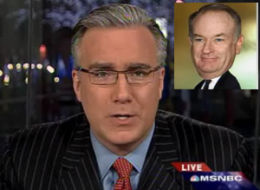
My finance lesson this week came from watching Bill O’Reilly squirm. He was boiling mad at me, and even his fellow conservatives couldn’t quite figure out why (note the confusion on the face of the silly conservative radio show host, Laura Ingraham). The reason O’Reilly had become obsessed with me and my words is because of the dirty secret exposed by MSNBC host Keith Olbermann: A group with which I am affiliated, The Your Black World Coalition, has mobilized an intense email, phone and letter writing campaign to O’Reilly’s corporate sponsors, the FCC and the producers of the show. The ultimate objective is to hold O’Reilly’s corporate sponsors accountable for supporting a man who has consistently engaged in dirty tactics to defame Jeremiah Wright, Barack Obama and other respected individuals in the black community. While O’Reilly is certainly entitled to Freedom of Speech, I won’t have him unfairly assaulting and defaming my respected colleagues, and using my money to do it. While I give O’Reilly credit for being a good financial student, he must remember that I am ultimately the professor.

In reference to my many “lies” to smear O’Reilly, Keith Olbermann asked Bill one simple question: “If that’s what Watkins said, where are the lies?” In naming Bill O’Reilly “The Worst Person in the World” for his attacks on me and the chancellor, Olbermann quoted my reference to O’Reilly’s statement about wanting to have a “lynching party” on Michelle Obama. O’Reilly speaks of lynching the potential First Lady of the United States, and then has the nerve to call others racist and unpatriotic.

Given my training in finance, I learned one thing about living in a capitalist democracy: money makes people move. O’Reilly also understands this. Money makes good people do bad things and gives bad people an excuse to do good things. Money is the reason Fox News exists, and why this form of “capitalism gone wild” has destroyed the integrity of American journalism. Money is the reason that Barack Obama went from being a non-factor to becoming a target of The O’Reilly Factor and the reason that President Bush is sweating over the price of gas.

It is the ability to acquire resources, mobilize resources and take away resources that will change this election. This election will, in turn, change the world. Race matters, there’s no question about that. But money matters much more.

Dr. Boyce Watkins is a Finance Professor at Syracuse University and author of “Financial Lovemaking 101: Merging Assets with Your Partner in Ways that Feel Good.” This book is one of the definitive guides to Love, Money and Relationships, cited in Essence Magazine, Black Enterprise and other outlets. For more information, please visit www.BoyceWatkins.com.

Monday, May 5, 2008

Black Money, Black Wealth, Black Liberation: What black people should do right now

I spoke this weekend at an Entrepreneurship boot camp for The Urban Philly Professional Network. The head of the organization created something I consider to be profound and promising. He regularly gathers the black entrepreneurs of Philadelphia for networking events, training and motivation for their endeavors. I am proud of him because he has shown a consistent commitment to two issues of critical importance in the black community: black people working together and black people engaging in the ownership of capital.

Black entrepreneurship is not just about money. It’s about LIBERATION. The easiest way for me to control another man is for him to know that I am the reason his kids get to eat every day. That man will do exactly what I tell him to do, when I tell him to do it, and how I tell him to do it. Historically, African-Americans have been consumers of products and sources of labor. We have rarely been in a position to own or control capital. This country’s empire of wealth was built without black participation, as our ancestors were unable to transfer assets to their children. We all know that. Slaves were a form of human capital from which our country’s foundation was created. Theft from the black community is in the trillions.

As a result of this legacy, nearly every inch of the financial capital base of American institutions is controlled by someone else: The media, corporate America, academic institutions, you name it. Fox News freely spouts racism because Rupert Murdock and others like him control media infrastructure. Universities earn over 1 billion dollars per year from the families of black athletes because HBCUs don’t have the capital base to compete for these players. Jeremiah Wright and Barack Obama end up with distorted images because they’ve attempted to repair their reputations by appealing to the same institutions that destroyed their images in the first place. There are few black alternatives to media and corporate America, so our messages, leadership, outcomes and incentives are typically beyond our control. The controller of capital is the controller of destiny, so the social implications of capital ownership are vast.

The legacy of disproportionate capital acquisition also breeds a mentality in those who are controlled by capital. Some might call it the slave mentality. It affects all of us, from truck drivers to college professors. The slave mentality says your sole objective for obtaining education or skill is to work for someone else. We seek to find a job, rather than create one. Even most black doctors, lawyers and college professors fall victim to this mentality, as this is the tradition for many people of color. Risk aversion in the black community is strong enough to choke a horse, and any dreams of “going at it on your own” are squashed by relatives who encourage you to take the high paying, “prestigious” position at IBM or Stanford University.

The problem with the slave/laborer mentality is that there is a huge social price being paid when one spends his/her entire life drinking from someone else’s fountain: You are not free to pursue social justice and the platform on which you stand can be taken out from under you at a second’s notice. When injustice occurs around you, you are trained to sit silently and hope for the best. You don’t dare rely on ideas like “academic freedom”, because capitalism usually trumps idealistic concepts like democracy and freedom of speech. You can speak freely as long as it is financially convenient for the organization that controls you.

When I met with the black entrepreneurs and business owners of Philadelphia, I reminded them of the significance of their contribution to Black America. Owning a business is not about making a dollar, it’s about providing a critical supplement to the work of Dr. Martin Luther King, Jr. Black Entrepreneurs aren’t just finding a source of income, they are building black institutions. I reminded them that General Motors wasn’t built in a year, and that they should be proud of the trees they’ve planted, even if they are smaller than the strong, sturdy oaks around them.
There was a time when a high ranking position in the British Empire paid a lot better than joining the American Revolution. Black Entrepreneurs are the financial Harriet Tubmans of the black community: liberating people in mind, spirit and resources.

Many of us are so “blinded by the bling” that we take our eyes off the prize. Even those with high incomes remain as vulnerable as Katrina victims, as one unfortunate event can lead you to financial ruin. High income without an understanding of wealth building, diversity of resources and long-term financial stability is a recipe for financial disaster.

An understanding of the strengths and weaknesses of capitalism is critical to any social movement in America. Socially responsible financial machinery can serve to empower and sustain movements toward justice and equality. Models of entrepreneurship should be taught to every black child in America. Children should understand the nature of revenue generation, cost minimization and how business models work. The path to liberation in a capitalist democracy goes straight through Financialville. Controlling capital means controlling lives, and it’s tough to be free without it.

Dr. Boyce Watkins is a Finance Professor at Syracuse University and founder of YourBlackWorld.com. He is also the author of Financial Lovemaking 101, the definitive guide on black love, black money and black relationships. For more information, please visit www.BoyceWatkins.com.


Friday, February 29, 2008

Dealing with Bill Collector Harrassment


By Dr. Boyce Watkins - Syracuse University


Bill Collectors really want their money, like the rest of us. Some of them seem to feel that it is O.K. to resort to flat out thuggish intimidation to get their money back. That might work on The Sopranos, but it shouldn't work in real life.

Part of the reason abusive bill collectors can have their way with the public is because many citizens do not know their rights. Bill collectors prey on the uninformed in a terrible way: they threaten to have them arrested, they harass their relatives, call all hours of the night, the list goes on and on.

One woman successfully sued a rogue bill collector after he called her repeatedly with threatening language. The woman, a senior citizen, was told by the man to "Stop with the sob stories and pay your god damn bill!"

The Federal Trace Commission states that complaints against bill collectors are rising, reaching the highest level they've seen in the past 3 years. Most of the complaints focus on vulgar language, trying to collect more than the amount of the true debt, and extra fees, such as court costs.

There are rights that can protect you from bad and malicious bill collectors. You want to keep these in mind as you work yourself out of debt:

1) There is something called "The Fair Debt Collection Practices Act". If you are not familiar with this document, get familiar with it. You can read it by clicking here.


2) A bill collector cannot contact you at work if your employer does not approve of the contact. Let the bill collector know that this is the case and they must legally stop contacting you at your job.

3) Bill collectors cannot call you before 8 am or after 9 pm. The only exception is if you give them permission to do so.

4) A bill collector can only contact your friends and family if they are trying to find a way to get in touch with you. However, some of them may do this in order to harass or embarrass you. If that is the case, you may want to tell your friends to tell the bill collector, "She does not live here and I do not know how to get in touch with her. Please don't call here anymore." Then, get the bill collector's information from your friend and reach out to them when you can.

5) You can get them to stop contacting you altogether by sending them a letter telling them to stop. You still must pay the debt, but they won't be calling you during dinner.

6) The bill collector can not curse at you or use foul language and they must tell the truth about how much you owe. They cannot threaten to sue unless they are serious about it, and they can't touch your 401k or IRA.

7) If they call you, you can demand that they send you a written notice of the amount you owe and who you owe the money to. If you do not believe that the debt is yours, you can write a letter to them stating that this is not your debt. They must then send you proof that the debt is actually yours.

If you feel that a debt collector has violated any of these rules, you can contact the Federal Trade Commission at www.ftc.gov. Remember that you are not powerless in this situation.

Dr. Boyce Watkins is a Finance Professor at Syracuse University and author of "Financial Lovemaking 101", the definitive guide to love, money and relationships. For more information, please visit www.financiallovemaking.net.

Monday, February 11, 2008

Dealing with the Recession the Right Way: How to be Great in 2008


By Dr. Boyce Watkins
www.BoyceWatkins.com

You may have heard from the “financial experts” on TV that the recession is coming. For lack of a better phrase, many of us might be tempted to say “no duh”. Hearing a rich person on TV tell you that hard times are on the way is like being knee deep in water and getting a rain alert from the weather man.

Most Americans knew the recession was here when they started losing their homes in the subprime lending crisis. Many others learned about the recession when they could not afford heat for their homes, health care for their families, or college tuition for their children. According to a recent Gallup poll, 50% of all Americans expect their standard of living to decline. We don’t need a Suzie Orman, Larry King or some random journalist to tell us that.

As a financial researcher, I saw the recession coming 2 years ago during my fellowship with the Center for European Economic Research. The data showed, quite clearly, that Americans were managing their money like a pack of drunken sailors. We were over spending, over borrowing, under saving and under investing. That combination is never good in the long-term. Financial chickens always come home to roost.

We weren’t exactly seeing a good example from the Federal government, who has taken the word “conservative” out of the term “Conservative Republican”. Spending on a war that cost entirely too much, we were borrowing in a manner that even scared people who don’t care about politics. If our government were a college student, he would be getting an angry phone call from his mother.

It is not my belief that we should worry about the government when it comes to getting through the recession. The highly publicized “stimulus package” is only designed to stimulate you to do more of what got you in this mess in the first place. Giving Americans money back in hopes that they will spend it is like getting the drug addict high again to avoid the hangover.

“Personally responsibility” is a phrase often used by conservatives toward the poor. But it is also the key phrase here, as many have demanded that the government bail out those of us who bought homes we could not afford, stopped saving for retirement, or took extra hits from the “credit card crack pipe”. All of us make mistakes, but it is important to learn from the mistakes to move forward in prosperity.

Here are some quick lessons we can learn from the current economic downturn. The recession “out there” in the broader economy has little to do what is going on in your own home. In fact, my grandmother used to say that growing up “The Great Depression was business as usual for black folk. We didn’t know there even was a depression in the first place and we never really saw it come to an end.”

1) Budget Budget Budget – Most Americans don’t keep a budget and it leaves us in a financial mess. Spending money without a budget is like driving your car without a map. At the end of the day, you don’t really get anywhere meaningful and just end up running out of gas.

2) Use government help as a stepping stone, never as a crutch – if the government sends you a tax refund, save it. They are also making it easier for those with more expensive homes to get 3% mortgages, subsidized by tax payer money. Subsidized mortgages are a much better use of tax payer resources than blowing it on Iraq. Look into these options and learn what opportunities are available for you.

3) Take stock of your financial life – Calculate your net worth, which is the market value of all your assets, minus the debt you owe. Being in debt is not a terrible thing, but not trying to get out of debt can be a problem. If you are a professional, take account of the amount in your retirement savings and find out if your company has options for retirement investing.

4) Kill a Credit Card Today – Find a credit card and slice that son of a bitch in half. Most of us have 4 or 5 of them, so just pick one and see if you can go on a cash budget. In fact, you may want to give yourself a cash allowance in order to control your frivolous spending. Credit cards really do seem like free money, which impacts the perception of our spending.

5) Declare a One Month Spending Freeze – For four straight weeks, try to only pay necessary bills. Don’t go to the mall, don’t go out to eat, don’t buy any new clothes, shoes, hair, or fur coats for your puppy. Take the extra income you will get from the freeze (calculated in your budget) and put that money into your retirement plan or brokerage account. If you don’t have one, get one right now.
Habits are created by a series of seemingly insignificant actions, all headed in the same direction. The depths of despair serve as incubators for our greatest achievements. Let’s be wealthy and great in 2008.

Saturday, February 9, 2008

Is the Iraq War Worsening the Recession?


Americans recently expressed in an AP poll that rather than having a huge economic stimulus package to help with our nation's pending recession, they would rather stop waging an expensive war in Iraq.

Getting out of Iraq was tops in the list of remedies for economic problems, along with spending more on domestic programs and cutting tax rates. The most recent Congressional idea of giving rebates to the poor in hopes that they spend the money was at the bottom of the list.

The economic stimulus package has a cost of $168 Billion and will give rebates to taxpayers of between $600 and $1200. Only 19% of those polled stated that they planned to spend the money, as the government hopes they will do. Financial personality Suzie Orman, on Larry King Live, said that she hopes Americans will not spend the money.

Others tend to agree.

"Let's stop paying for this war," said Hilda Sanchez of Waterford, Calif. "There are a lot of people who are struggling. We can use the money to pay for medical care and help people who were put out of their homes."

Currently 65% of Democrats think the U.S. should leave Iraq, with only 18% of Republicans agreeing. 61% of all Americans think that the U.S. is already in the middle of a recession.

Dr. Boyce Watkins, Finance Professor at Syracuse University, says the recession was a long-time coming.

"When you consider that Americans have been spending their money like drunken sailors for the past few years, the recession was a long time coming," says Dr. Watkins, a regular CNN contributor. "The sub-prime lending crisis was a clear sign that many Americans are in financial trouble."

According to the National Priorities Project, a group that studies the Iraq War, the cost of the war has nearly reached a half trillion dollars. While American contractors have benefited financially, the average American has not. Millions of Americans have no health insurance and the public school system has been considered disgracefully inadequate.

The Federal Reserve has contributed to the economic stimulus package by aggressively lowering interest rates. Federal Reserve Chairman Ben Bernanke has been called "Bold Ben" by some who charge that he pushes too hard to reduce interest rates when the economy is struggling.

Some question whether the government's policies are good for consumers.

"What is good for the economy as a whole — spending a rebate — is not the best idea at an individual household level if you are buried in debt," said Greg McBride, senior financial analyst at Bankrate.com. "Issuing rebate checks to give a boost to consumer spending amounts to a Band-Aid over the much bigger problem of consumer debt burdens," he said.

Dr. Watkins also argues that in addition to the economic crisis set for the short-term, America should prepare itself for a pending retirement crisis.

"The perfect storm for a retirement crisis has been created," says Watkins, author of 'Financial Lovemaking 101'. "Americans are not saving, pension plans are disappearing, social security is dying, people are living longer and the cost of health care is rising. Something has got to give."

Tuesday, January 29, 2008

Your Black Money Myths: 3 Myths About Investing


When it comes to money, there is a lot of hoopla. As I witness the financial frenzy that comes with each fad, I am reminded of the days of snake oil salesmen, taking advantage of the hopes and dreams of many to fill the coffers of the immoral. When I watch the late night “Get rich quick” schemes, I wonder if anyone is getting rich other than the professional, perpetrator or pastor selling the book being featured. Some of the advice shown on television isn’t bad, but as a Finance Professor, some of the advice makes me shudder. Not to say that all of the self-proclaimed “financial experts” are immoral or incorrect, but it is not hard to find flaws in their perspective.

Being mislead causes the most pain to those who do not understand money. Many people do not understand the basics, which can make them vulnerable to those who use long words to confuse them. When I teach Finance courses to my students, I enjoy finding simply ways to communicate complicated concepts. The ultimate goal is for the student to be able to discern the good advice from the bad.

I have compiled a list of quick and dirty myths about money and finance that can help you to get started on your path toward financial understanding. While this is just the tip of the iceberg, perhaps the ice will whet your appetite to learn more about the world of financial management.

Myth #1) An investment is only good if it helps you to earn more money

According to quite a few financial advisors, every penny you invest should be put into assets and ventures that are going to give you a financial return. The “gurus” tell stories about how investing your money to make more money implies that you are smarter than the person next to you. By virtue of your being smarter, you are therefore entitled to a happier life. Money is also made into the most important thing on earth, and you end up feeling bad if you are not, as you are sometimes told, hoarding every penny and allowing those pennies to dominate your personal life.

There are quite a few scenarios in which money should be used to make more money, and there is nothing wrong with that. But more money doesn’t always imply you will have a wealthier life. There are times when buying a car or taking a vacation can be much better uses of your money than buying another stock, bond or piece of real estate.

In fact, if the sole objective of money is to make more money, then that means you should just send your children to Dr. Kervorkian (the man who kills people for a living), since kids are expensive and don’t give you any of your money back. Don’t be so hard on yourself when it comes to investing. Investment is like working at the office or having sex: it’s ok, as long as it’s done in moderation.


Myth #2) Only some investors have a portfolio

What is a portfolio? A portfolio is a set of valuable investments that give you something back. When I ask my students “How many of you have a portfolio?”, only a few of them raise their hands. I then explain that making an investment is equivalent to putting a scarce and valuable resource toward the creation of something more valuable over time. Most of the students fail to realize that money is NOT the only scarce resource you can invest. You can also invest your time, your energy, your health and even your love. All of these amount to allocations of scarce resources, and most of us make these investments every single day. The decision to get out of bed is an investment, since you could easily spend your time lying around watching TV. The clothes on your back are part of your portfolio, since you have invested to obtain them, and they do provide you a return (your reward for investing in clothes is that you get the peace of mind of looking good and not having to walk around naked!).

The point here is that you should have a more complete way of thinking about investing. Money is only one type of investment, and it is sometimes the least valuable asset in our life portfolio. You have probably heard people say “time is money”. Well, that’s not exactly true. The truth is that time is MORE VALUABLE than money! If you are 22 years old, and you waste your time, you will never get to be 22 years old again. No amount of money can make up for being, say, falsely incarcerated for 15 or 20 years. However, if you lose money, you can usually get it back later. So, whether we have money or not, we are always investing.

Myth #3) The stock market is one of the best places to make money

The stock market is not a great place to make money, at least not in the short-run. It is a great place to keep the money you’ve already made. Don’t get me wrong. There are many people who’ve made their fortunes trading stocks, but that is not the norm. Additionally, even though there are many who’ve made a fortune trading stocks, more fortunes have been made using other investments. The stock market is what they call an “efficient market”, which means that it is tough to find a good bargain. This is a lot different from some other markets, where you can find a pretty good deal if you look hard enough.

When looking for a place to invest your money first, you should start with the investments that offer the highest return for the lowest risk. In other words, if you find something you are familiar with, you are likely to have a better outcome. One place to start might be with an investment in YOUR SELF. Do you have enough education to have the kind of career you would like? How about going back to school for that college degree or MBA? In my own research, I have determined that the returns to this kind of investing far exceed the returns generated from the stock market or other places.

You might also consider investing in Real Estate or even in the business of a relative. If you have a friend that is going into business, and you have reason to believe that this person is fulfilling an unmet need, has a guaranteed customer base, and is reliably going to give you your money back, then this kind of investment might be better than going right to the stock market. Just make sure that you sign a legal contract so there are no misunderstandings.

You can also make a lot of money by cutting your spending. Consider the following two options. Let’s say you have a credit card that charges 15% interest with a balance of $10,000. You have $10,000 available for investment, and you can either use the money to pay off the credit card or invest in stocks. Let’s also assume that you expect to earn 10% on the stock market (roughly what the US stock market earned during the 1997 – 2001 time period). There are two things you must remember about this investment:

1) The amount you are paying on your credit cards is greater than what you would earn from the stock market.
2) The amount you would earn from the stock market is risky, so it could be higher or lower than the average. The amount you are paying on your credit card is going to be the same, no matter what.

So, you have two choices: You can either a) invest the $10,000 in the stock market, earning an average of 10%, or you can b) Use the money to pay off your credit cards, ridding yourself of the 15% interest expense. If you go with option a) (investing in the stock market) and assume that you are guaranteed 10% on your money, you will earn $1,000 and have to pay $1500 in credit card interest (15% x $10,000). This leads to a net loss of $500.

If you go with option b) (paying off the credit cards and not investing in the stock market), you can save $1500. So, there is a $2,000 ($1500 – (-$500)) difference between these two choices.

The point is simple: “A penny saved is a penny earned”. You can rephrase this statement as “A penny not paid in interest is a penny earned in interest.” By using excess funds to pay off high interest debt, you have found one of the best investments around.

The point of this article is the following: Investing in the stock market is nice and glamorous, but it’s not the way to make money. If you really want to make money, you should start with investments around you: Buying a home, paying off credit cards, or going back to school. These investments give higher returns than the stock market and lead to a wealthier life.


Myth #4) Putting all your eggs in one basket might be OK

“Diversification” is an important investment concept that most investors do not think about. It is the idea that you should not put all your eggs in one basket when investing. Many investors do not follow this rule, instead putting all of their money in one place. This is a BAD idea! Consider the employees at Enron (the company that went bankrupt a few years ago). Some of the Enron employees had their entire retirement plan with one company. Many of these people lost their life savings when the company went bankrupt.

Every good thing eventually comes to an end, and if you are properly diversified, you are protected when things really do fall apart with your investments. Diversification means that you not only buy a large selection of stocks, but you keep your money in different types of investments. For example, if a person has a portfolio to invest, they should keep a few thousand in different kinds of stock, some of the money in their savings account for a rainy day, some of the money in real estate, and some of it in the family business. Spreading your money around protects you well when things go bad in the market.

Another thing about investing is that it should be GLOBAL. If you buy a portfolio of stocks, you do not want to have your money focused on the United States. There are mutual funds which allow you to invest all over the world, where many of the best opportunities are. Make sure that you are diversified across boarders, so if one country’s market fails, you will have investments all over the world to protect you.


Myth #5) If a stock has done well in the past, it will continue to do well in the future

Most people think that if a stock has a good past performance, it is going to continue to be a good stock in the future. All of my own academic research, as well as the academic research of many others, shows that this assumption is almost always WRONG. There are some rare exceptions in special cases, but for the most part, the past performance of a stock or mutual fund manager is no indicator of what is going to happen in the future.

You see it all the time: magazines will rank the best performing stocks, top industries, and best performing mutual fund managers. This publicity is great for the fund manager, because he/she knows that most investors do not know the truth. The truth is that when ranking investment managers and stocks on the prior year’s performance, there is almost no positive relationship between the performance of the past and that of the future. Notice that I say “almost no positive relationship”. That is because my research shows there are some rare cases in which there is some relationship, but this is not something worth betting the house on.

The best way to invest in stocks is not to chase winners. The best approach is to simply invest in solid companies for the long haul and keep your portfolio diversified. If your portfolio is properly diversified and you leave money in your investments for several years, you will most likely find a natural growth which allows you to sleep at night. Those who chase every hot stock down the street end up driving themselves nuts.

Dr. Boyce D. Watkins
www.myfinanceprofessor.com

Monday, January 21, 2008

Americans Getting Too Broke to Die


by Dr. Boyce Watkins, Department of Finance, Syracuse University
www.YourBlackWorld.com


I have some good news and some bad news. The good news is that Americans are really stinking rich. Compared to the rest of the world, our financial problems are essentially non-existent. We don’t worry about having food on the table. We worry about keeping up the payments on our two cars, expensive mortgage and maybe even the rent for our 28 year old son. Relatively speaking, we are doing OK.

The bad news is that there is going to be less good news in the future. America is on its way to one of the greatest retirement crises of our time. There, I said it. I am a Finance Professor, so I think about this kind of thing all day. The baby boomers have hit the boom and they are on their way to the bust. Americans might be loaded compared to the rest of the world, but to have something and lose it can be worse than never having it at all. So, relatively speaking, we are not OK.

The baby boomers are on their way out the door of the work world, and headed for that blissful place called retirement. They had a big financial party in the 1980s and 1990s, and it’s always after the party lights go out that you find out who drank too much beer, who broke the lamp and who is waking up in jail. Let me explain the recipe for the pending retirement crisis. The ingredients should be cooked up and ready to go over the next 10 – 15 years, and you can probably smell the aroma right now, with the subprime lending crisis yanking on the purse strings of many seemingly well-off families:

1) Social security is getting very insecure: Statistics show that the average American family owes about $500,000 per household necessary to pay the government's future retirement obligations. The population is aging and the young workforce is declining in size. In most societies, young people take care of the old with their productivity. The problem is that there are going to be far more old people than before, and the dwindling youth population is going to be carrying them (and their old deficits) on their backs.

2) Pension plans are disappearing: Globalization has reduced the need for companies to have great pension plans. Why pay a huge American pension when you can buy out the American worker and hire someone in China for $2/day? Since Americans don’t save, you can easily give $100k to buy out a worker who would have earned a million dollars more over time by keeping his/her job. Many great American companies are no longer following the rules of your parents when it comes to providing long-term security.

3) Americans are pathetic savers: The net US savings rate is negative. That means that we save less than we spend. Debt is the boat keeping us afloat, and as the lending crisis taught us, the raft eventually runs out of air. We send our kids to expensive universities, mortgage our homes as many times as we can and pamper ourselves into the ground. After a while, it’s time to pay the piper for the pampers, and that time is coming soon.


4) The fountain of youth has been sprinkling on us: We are living longer, which means that there has been a dramatic shift in the retirement planning paradigm. You once expected to kick the bucket just a few years after you retire, but now you get to extend your financial challenges by another decade or so. The idea of not getting a solid paycheck for 20 years can be a frightening thing.

5) The cost of healthcare is rising like a rocket: If I were a healthcare company, I would find the nearest politician and give her a big kiss. The truth is that political “leaders” have been getting hooked up by politicians for years, and are now allowed to financially pillage American citizens. Our privatized healthcare system is unlike any other in the world and the pharmaceutical companies are working overtime to convince you that you have illnesses you’ve never thought about. Regular drug dealers are scary, but corporate, government sanctioned drug dealers are the absolute worst. Perhaps you might be turning toward some of those drugs to get through the rest of this article. I’m sure the pharmaceutical companies would be glad to recommend something.

America is not going to get it together anytime soon. We’ve overdosed on Vh-1, MTV Cribs and Lifestyles of the Blingingly Fabulous. But the fact that America has fallen asleep at the wheel doesn’t imply that you’ve got to crash along with it. Be smart, have fun and have some degree of moderation. Go see your retirement advisor right now to find out what you can do to prepare for the future.

Plan ahead and your golden years can be shiny…..and that’s without all the drugs.

Sunday, January 13, 2008

Black Money May Suffer: Recession is Expected


The economy is threatened with a major recession. The housing crisis has caused ripple effects, as many banks have been forced to scale back their lending. Additionally, unemployment is at a two-year high. This has some wondering if the economy is headed for a major downturn.

Wall Street seems to think so. Known as a "leading indicator" for the economy as a whole, the recent slide in stock prices is a signal to some that the economy and corporations are headed toward lower future earnings.

At the beginning of 2007, economists surveyed cited a 1 in 3 chance that the economy would go into a recession. Now, they say it's 50/50. Some think that a recession is a sure thing.

President Bush and Congress are exploring options to avoid a recession, including tax rebates. Lower taxes encourage spending. Federal Reserve Chairman Ben Bernanke is proposing lowering interest rates. Lower taxes and lower interest rates encourage two economic stimulants: more spending and greater investment.

"The recession gorilla is there. The question is can the Federal Reserve do enough to avert a recession?" stated Brian Bethune, economist at Global Insight. "We think the odds are close to 50 percent that there will be a recession. It is high — no question about it."

There is a question of whether the Federal Reserve, the financial governing body for the US, agrees that a recession is on its way.

"The Federal Reserve is not currently forecasting a recession," Fed Chairman Ben Bernanke said last week. "We are forecasting slow growth."

Technically, a recession is a period of two straight quarters of negative economic growth. In other words, six months of slumping.

Some have concerns for African-Americans, who tend to feel the greatest effects of economic downturns. They have also been hit disproportionately by the housing and foreclosure crisis.

Additionally, there is fear that if consumers expect a recession to occur in the near future, they are going to stop spending in order to prepare. Businesses may also stop investing to prepare for the recession. If this is done on a large scale, the effects of the recession will worsen.

Friday, January 11, 2008

Avoiding Paris-Hiltonitis When it Comes to Managing Your Money


by Dr. Boyce Watkins - http://www.boycewatkins.com/


There’s nothing wrong with a little shine in your life, especially since you have worked hard to get that degree. But shining too hard can have you rolling on 24s to bankruptcy court. Whether you earn 10 dollars per year or 10 Million, you are a financial slave if you are not saving, investing and letting your money grow. As I like to say, “To ‘floss’ at 23 is human, but to floss till you’re 90 is divine”.

As a Finance Professor and your personal Financial Physician, let me give you a list of rules to live by, so that your grandkids will be riding high on the hog after you have cooked up the pork chops. A mind is a terrible thing to waste, and you are wasting your mind if you have not used it to build, invest and teach in your community:

Rule #1: The easiest way to stay poor is to never own anything. Renting an apartment will help your landlord get a house, not you. Buying cars helps the auto dealer get a new limo, not you. The candy apple paint on their new Mercedes is being peeled right off your black butt. Get on the other side of that deal! Buy a house as quick as you can, buy stocks, buy bonds, own ASSETS. Don’t believe the hype about having a high paycheck; It means nothing if you don’t own anything.

Rule #2: The quickest path to getting pimped is to always work for someone else. Don’t just try to find a job, put yourself in position to CREATE a job. Start your own business as soon as you can. Remember: when you are working for someone else, they are usually earning 10 dollars for every dollar they pay you. Now THAT’S pimpin. Get with the GRAND hustle, not the BLAND hustle by using the PLANNED hustle to start your own business.

Rule #3: Save at least 10% of your money every time you get paid, NO EXCUSES. You should pay yourself first by having the money come right out of your check. A person who saves $200 per week starting at the age of 22 and invests that money in the stock market for a 10% return every year will have roughly $43,000 by the time they are 32, $434,000 by the time they are 52, and $1.6 million when they are 65. That’s enough money to help Flava Flav get a new girlfriend.

Rule #4: Create multiple streams of income. Your salary should only be one. I don’t care if you sell comic books, Avon or rotten fish. Remember the words of the rapper TI: “If the grapes don’t sell, I dry em up and sell raisins.” Side hustles provide job security, in case your boss hands you the pink slip. If you are smart, you can hand the pink slip to your boss.

Rule #5: Love is creepy sometimes, so watch who you hook up with. Merging your money with someone is like having sex with them: it can be an amazing experience, or it can leave you burned and bitter. Whether it is marriage or starting a business together, only merge your money with someone who cares about your best interest. In other words, don’t waste your life with losers.

Read my lips and follow these tips, and your future will have so much shine that Stevie Wonder will need to put on his sunglasses. Now that’s pimpin.

Tuesday, January 8, 2008

Finding Ways to Save Money


Saving Money can be tough, but it's not impossible. So, I figured that, in order to help us get our January started off right, I would give you some quick tips to save cash. The motto for today is "You have to have your mind right to keep your money tight", so think of this as every bit of a psychological exercise as much as it is a financial one:

1) Keep a budget - if you don't know where your money went, it's hard to know where it's going. Plan your spending and make sure that you are aware of just how much is coming in, going out and expected to be made in the future. This can help you plan cut backs or extra spending.

2) Take your lunch - did you know that by spending $7 per day for lunch, 5 days per week, you are spending $1,820 per year? If someone were to take that money and invest it in a portfolio earning 8% per year for 30 years, they would have $206,175.44. Now go snack on THAT.

3) Cut 10% out of your spending right now. Find that bill that you don't need or whatever else, and force yourself to make it happen. Pretend that your boss just gave you a 10% paycut and you have to take things out of your budget. Come on, you can do it!

4) Slice up a credit card or two - credit cards are America's financial poison and we are all addicted on some level. Get off the credit card crack pipe and start making healthy financial decisions.

5) Use a grocery list - don't shop without a list, so that your spending can be focused. Overspending at the grocery store gets me in trouble, which is why I have been getting fat. But not anymore, I am going to keep that list in my pocket. So, you see? We all have our vices, but it is up to each of us to work through our personal demons.

Saturday, December 29, 2007

Dr Boyce on NPR - Black Family finances

As a finance professor, I see regular misconceptions in media about black people, black families and black wealth. America somehow has chosen to believe that the reason for wealth disparities in America is that African-Americans have simply chosen to be lazy and engage in the practice of bad money management. They also cite the fact that black families are not married as regularly and that this is a reason for poverty in the black community.

I could not disagree more.

The reason for the wealth disparity between blacks and whites is very simple: For 400 years (a very long time), America had a clear tradition of not allowing black people to pass wealth onto their children. As a result, all the big buildings in Manhattan, all the major media companies, and all the large corporations in America are owned, run and controlled by the white community. Period. Most wealth is inherited wealth and we were not allowed to inherit.

Black people choosing not to get married is no worse nor better than the fact that many families in America choose to get divorced. Honestly, I think divorce is far more devastating to the life of a child than not getting married. If one throws in the fact that non-custodial parents are obligated to pay child support, then the income gap, in a perfect world, should disappear. One can argue that two parents are better than one, but at the same time, 3 parents would be better than 2, and 4 parents would be better than 3. You could make this argument forever, and to use the one vs. two parent disparity as the fundamental basis to explain America's commitment to racial inequality is ridiculous.

Bottom line: Love is what matters, and if you look at the lives of Al Gore's son and kids in the suburbs who engage in just as much deviant behavior as kids in "the hood", you will see that a parent's decision to get married or not can be good for the child or bad, depending on the circumstances.

In other words: I get sick of people trying to say that black families are immoral or culturally inferior. Our culture is just fine thank you. Also, racial inequality and wealth gaps are due to one thing: historical discrimination. If you want to talk about creating a fair america, then you must first correct the huge imbalance created by racist ancestry. Trying to be fair from this point on (as Ward Connerly tries to argue) is like a lifelong crook stealing billions and then promising not to steal anymore. A fix must be applied to past wrongs before you can move forward in fairness.

I did this NPR interview on the topic not too long ago. It was done with Farai Chideya, a woman I had a huge crush on during my time in graduate school. Don't tell her I said that (haha!).