Show all posts
Showing posts with label black professors. Show all posts

Saturday, February 14, 2009

Credit Card Companies are Changing the Game On You

By Dr. Boyce Watkins

www.DrBoyceMoney.com

In case you weren’t sure, credit card companies are not out to help you. If you are financially illiterate and uninformed, they are going to exploit you. If you are worried about the financial crisis, they are going to prey on your fear to get money out of you. They are also doing exactly what the rest of us are doing: trying to remain protected in a fragile economy.

The stimulus is stymied. The bailout is a failout. The stock market has consistently given a “thumbs down” to every piece of legislation passed in response to this crisis. Our economy is like the sick man who won’t respond to antibiotics. While the results of the latest package are yet to be seen, the truth is that no one is sure what will work. Every company is out to protect their assets and hold on to their cash, which means they no longer have much interest in loaning money to you.

Yes, this is true even if you have a good credit score, which is the ironic part.

Customers are opening their monthly statements to find that credit card companies have started to either ration credit (give less of it) or raise the interest rate being paid on outstanding debt. This doesn’t even count all the dirty tactics used, like using your payments to pay off low interest debt first, quietly getting rid of the grace period or charging interest on your balance from the prior two months vs. the current one. Even when you’ve been making payments on time for years, banks keep raising the bar to maximize shareholder wealth. When liquidity is scarce, those giving out water demand a higher cost per bottle. Additionally, higher default rates have justified the increase in interest rates, but higher interest rates increase the likelihood of default. It’s a nasty cycle, really.

Lawmakers are trying to intervene. Congressional hearings have taken place. Banks are being scolded by senators who keep telling them that this form of business practice is unethical and that they are gouging the American consumer. All this might be true, but what is also true is that you can’t force banks to loan you money. Also, it is very difficult, if not impossible, to legislate a strong economy.

If you have a less than stellar financial history, there is an even greater opportunity for your credit card company to raise your interest rates. If you have defaulted on other loans or are a slow payer in other areas, then they have no problem telling you to pay up or ship out. The days of easy money are long behind us, and companies are dramatically shifting their business practices.

The bottom line is that THEY’VE GOT YOU. They know that you’ve become addicted to the debt they so readily offered in the past, and this debt has become the lifeblood for the lifestyle to which you’ve chosen to become accustomed. They know that they can charge you a higher interest rate because you can’t do anything about it. Like a drug addict who is angry about paying more for his product, you really don’t have any other choice.

Well, maybe you do.

Here is one solution: tighten your economic belt. That means putting together a financial fitness plan today that consists of getting rid of as much debt as possible. I’ve mentioned in prior articles and on our website that paying off debt can be one of the best investments you make with your money. This is especially true if you have a stable job and are paying a high rate of interest to your credit card company.

So, the Dr. Boyce Challenge for this month is simple: Create a budget which includes the steady elimination of credit card debt. That means you should list every single expense you have for the entire month on one piece of paper or a spreadsheet. Don’t leave anything out. Count the money you want to use for getting your hair done, your nails, paying your mortgage, car note, whatever. Count everything. That will be your first step toward obtaining financial fitness.

As you create the budget, allocate at least 10% of your monthly after tax income toward reducing credit card debt. So, if you earn $3,000 per month after taxes,$300 per month should be allocated toward removing credit card debt, not including interest. So, if you owe $5,000 in credit card debt, you can remove this debt in roughly a year and a half. While $300 may seem like a lot of money to find in your budget, it’s there if you look hard enough. In fact, if you spend $10 per day on lunch and/or coffee, you can find the bulk of the money by taking your lunch to work. Make this one of the first bills you pay, not the last. The last bill is the one that only gets paid half the time. It’s easier to negotiate with creditors if you don’t need them so much. Take small steps toward finding your financial freedom.

Next month, we will move to step 2 of the Dr. Boyce Financial Challenge. While I confess that this change won’t be easy, I can promise that it will be worth it in the end. Be strong and remain focused, this is your opportunity to shine.

Dr Boyce Watkins is a Finance Professor at Syracuse University and author of “Financial Lipo 101: From financial fat to fitness”, to be released in April, 2009. For more information, please visit www.DrBoyceMoney.com.

Friday, May 16, 2008

What I learned from Bill O'Reilly about Money


by Dr. Boyce Watkins
www.BoyceWatkins.com

I learned something about the power of money last night. I received an email from one of our readers on Your Black World, who simply said, “Bill O’Reilly is coming after you again.” I took it in and got back to what I was doing. I expected O’Reilly to make another smear attack this week, since a good terrorist always hits the target multiple times.

O’Reilly Bin Laden’s latest target was my poor chancellor, Nancy Cantor. Sending one of his goons (some call them correspondents) to the campus, Dr. Cantor was asked why she is allowing “the good name of Syracuse University to be ruined by a ‘racist’ like Boyce Watkins.” Translation: to some, a “racist” is any black person who speaks up for black people. I accept that.

O’Reilly never really came at me directly, as I and some other black scholars have refused to appear on his show. I don’t fault the ones who choose to appear, but I don’t consider a platform legitimate just because it has a few viewers. Instead, he felt that going after my chancellor and the alumni of Syracuse University would be a more reliable tactic.

I couldn’t agree with O’Reilly more, perhaps the chimp is smarter than I thought.

Our campus is in the middle of a billion dollar fund raising campaign, and I am sure there are those who are sickened by the fact that one of the most visible faculty members on campus is the subject of racial controversy. Financial theory teaches us that risk management and minimization are critical to maximizing popularity and profitability. Controversy is risk, and too much risk hurts your ability to raise money. Oprah knows this all too well, as her political moves have diminished her show’s brand and base during the past year.

As Barack Obama’s experience reminds us, race is not a comfortable conversation, even when presented in the most diplomatic fashion possible. The backlash is far greater when you are direct and honest. What’s interesting is that O’Reilly couldn’t exactly cite why he was so obsessed with me, nor could he point to any strong evidence to support his “race baiter” assertions. The mere fact that he labeled me a “race monger” was enough to get his disciples up in arms. Bill O’Reilly should change his name to Bill Oprah-Reilly, as he has an amazing ability to manipulate his minions and their small, impressionable minds.

According to Bill O’Reilly, I am using the Presidential campaign to engage in “villainous pursuits” to promote a radical agenda. Being the good and noble American that he is, his goal is to ensure that “race hustlers” like myself don’t use their “hate-filled speech” to manipulate the results of the 2008 Presidential Election. Bill O’Reilly has become Martin Luther King Jr in his fight for truth, justice and political purity. God bless him.

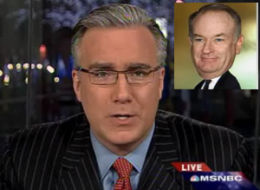
My finance lesson this week came from watching Bill O’Reilly squirm. He was boiling mad at me, and even his fellow conservatives couldn’t quite figure out why (note the confusion on the face of the silly conservative radio show host, Laura Ingraham). The reason O’Reilly had become obsessed with me and my words is because of the dirty secret exposed by MSNBC host Keith Olbermann: A group with which I am affiliated, The Your Black World Coalition, has mobilized an intense email, phone and letter writing campaign to O’Reilly’s corporate sponsors, the FCC and the producers of the show. The ultimate objective is to hold O’Reilly’s corporate sponsors accountable for supporting a man who has consistently engaged in dirty tactics to defame Jeremiah Wright, Barack Obama and other respected individuals in the black community. While O’Reilly is certainly entitled to Freedom of Speech, I won’t have him unfairly assaulting and defaming my respected colleagues, and using my money to do it. While I give O’Reilly credit for being a good financial student, he must remember that I am ultimately the professor.

In reference to my many “lies” to smear O’Reilly, Keith Olbermann asked Bill one simple question: “If that’s what Watkins said, where are the lies?” In naming Bill O’Reilly “The Worst Person in the World” for his attacks on me and the chancellor, Olbermann quoted my reference to O’Reilly’s statement about wanting to have a “lynching party” on Michelle Obama. O’Reilly speaks of lynching the potential First Lady of the United States, and then has the nerve to call others racist and unpatriotic.

Given my training in finance, I learned one thing about living in a capitalist democracy: money makes people move. O’Reilly also understands this. Money makes good people do bad things and gives bad people an excuse to do good things. Money is the reason Fox News exists, and why this form of “capitalism gone wild” has destroyed the integrity of American journalism. Money is the reason that Barack Obama went from being a non-factor to becoming a target of The O’Reilly Factor and the reason that President Bush is sweating over the price of gas.

It is the ability to acquire resources, mobilize resources and take away resources that will change this election. This election will, in turn, change the world. Race matters, there’s no question about that. But money matters much more.

Dr. Boyce Watkins is a Finance Professor at Syracuse University and author of “Financial Lovemaking 101: Merging Assets with Your Partner in Ways that Feel Good.” This book is one of the definitive guides to Love, Money and Relationships, cited in Essence Magazine, Black Enterprise and other outlets. For more information, please visit www.BoyceWatkins.com.

Monday, March 31, 2008

Bad Financial Leadership in a Really Bad Recession


by Dr. Boyce Watkins - BoyceWatkins.com


The United States is respected throughout the world for its powerful economy. We are also, unfortunately, known for our arrogance. U.S. Monetary policy, headed by Federal Reserve Chairman Ben Bernanke, is both art and science, and the success of Alan Greenspan has forced any subsequent Fed Chairman to become a Financial Da Vinci.

The 2008 recession provides just the right landscape for an allegedly great monetary artist to strut his stuff. The US economy saw its financial chickens coming home to roost, and the recession was a long time coming. These financial chickens included excessive spending by American consumers, mixed with irresponsible borrowing and lending on the part of both individuals and banks. Personal responsibility is thrown out the window when discussing wealthy and middle class Americans, as financial leaders are called upon to bail out the banks, the consumers and everyone else.

Two great weapons in the arsenal of the Federal Reserve are government spending and interest rate cuts. Higher government spending increases consumer demand for the goods and services we continue to buy but almost never need. Interest rate cuts reduce the cost of borrowing for everyone in the economy. This marginal decline in rates serves to stimulate investment by all Americans, since the cost of borrowed money is lowered.

The government bailout package for 2008 included a massive spending bill, one that featured tax refunds and support to help consumers keep their homes, even if they were the causes of their own demise. Another financial steroid being employed has been the strong and consistent cuts of the Federal Funds rate by Federal Reserve Chairman Ben Bernanke. Bernanke has become known as “Bold Ben” by the media, who are consistently stunned by the Chairman’s massive and powerful attempts to control the economic downturn.

The strong and bold financial leadership by our government has been applauded by some, and demonized by others.

Republicans, known for being fiscally responsible, have created budget deficits our country has never seen. Between the Iraq War and the 2008 recession, spending continues to go up, even when tax revenues are expected to go down. The ready availability of additional lending to support our massive spending bills has our financial leaders behaving like teenagers holding a “really awesome” American Express card.

Continuously cutting interest rates may provide additional stimulation to the economy, but the problem is that cutting interest rates, allowing the value of the dollar to slide and frivolous government spending is a recipe for serious, horrific and uncontrollable inflation. Inflation is like a Pandora’s Box: Once it’s out, it’s extremely difficult to reign it back in. It’s hard not to feel that “Bold Ben” and “Big Bad Bush” aren’t gambling with our children’s futures and current taxpayer resources.

Sometimes, when you party too hard, you are forced to deal with the hangover. Americans have been blessed with a financial celebration that has lasted over a decade. We danced with lamp shades on our heads: not saving effectively, spending like crazy and borrowing to cover our financial insanity. But rather than simply allowing the party to end and letting everyone sober up, our financial leadership has taken on the irresponsible behavioral norms of American consumers. Their excessive rate cuts and spending increases have kept us pumped up on Financial Dope in order to avoid the impending crash.

This is not solid financial leadership, and something has GOT to give.


Dr. Boyce Watkins is a Finance Professor at Syracuse University. He is also the author of "Financial Lovemaking 101", the definitive guide to black love, black money and black relationships. For more information, please visit www.BoyceWatkins.com


Monday, January 21, 2008

Americans Getting Too Broke to Die


by Dr. Boyce Watkins, Department of Finance, Syracuse University
www.YourBlackWorld.com


I have some good news and some bad news. The good news is that Americans are really stinking rich. Compared to the rest of the world, our financial problems are essentially non-existent. We don’t worry about having food on the table. We worry about keeping up the payments on our two cars, expensive mortgage and maybe even the rent for our 28 year old son. Relatively speaking, we are doing OK.

The bad news is that there is going to be less good news in the future. America is on its way to one of the greatest retirement crises of our time. There, I said it. I am a Finance Professor, so I think about this kind of thing all day. The baby boomers have hit the boom and they are on their way to the bust. Americans might be loaded compared to the rest of the world, but to have something and lose it can be worse than never having it at all. So, relatively speaking, we are not OK.

The baby boomers are on their way out the door of the work world, and headed for that blissful place called retirement. They had a big financial party in the 1980s and 1990s, and it’s always after the party lights go out that you find out who drank too much beer, who broke the lamp and who is waking up in jail. Let me explain the recipe for the pending retirement crisis. The ingredients should be cooked up and ready to go over the next 10 – 15 years, and you can probably smell the aroma right now, with the subprime lending crisis yanking on the purse strings of many seemingly well-off families:

1) Social security is getting very insecure: Statistics show that the average American family owes about $500,000 per household necessary to pay the government's future retirement obligations. The population is aging and the young workforce is declining in size. In most societies, young people take care of the old with their productivity. The problem is that there are going to be far more old people than before, and the dwindling youth population is going to be carrying them (and their old deficits) on their backs.

2) Pension plans are disappearing: Globalization has reduced the need for companies to have great pension plans. Why pay a huge American pension when you can buy out the American worker and hire someone in China for $2/day? Since Americans don’t save, you can easily give $100k to buy out a worker who would have earned a million dollars more over time by keeping his/her job. Many great American companies are no longer following the rules of your parents when it comes to providing long-term security.

3) Americans are pathetic savers: The net US savings rate is negative. That means that we save less than we spend. Debt is the boat keeping us afloat, and as the lending crisis taught us, the raft eventually runs out of air. We send our kids to expensive universities, mortgage our homes as many times as we can and pamper ourselves into the ground. After a while, it’s time to pay the piper for the pampers, and that time is coming soon.


4) The fountain of youth has been sprinkling on us: We are living longer, which means that there has been a dramatic shift in the retirement planning paradigm. You once expected to kick the bucket just a few years after you retire, but now you get to extend your financial challenges by another decade or so. The idea of not getting a solid paycheck for 20 years can be a frightening thing.

5) The cost of healthcare is rising like a rocket: If I were a healthcare company, I would find the nearest politician and give her a big kiss. The truth is that political “leaders” have been getting hooked up by politicians for years, and are now allowed to financially pillage American citizens. Our privatized healthcare system is unlike any other in the world and the pharmaceutical companies are working overtime to convince you that you have illnesses you’ve never thought about. Regular drug dealers are scary, but corporate, government sanctioned drug dealers are the absolute worst. Perhaps you might be turning toward some of those drugs to get through the rest of this article. I’m sure the pharmaceutical companies would be glad to recommend something.

America is not going to get it together anytime soon. We’ve overdosed on Vh-1, MTV Cribs and Lifestyles of the Blingingly Fabulous. But the fact that America has fallen asleep at the wheel doesn’t imply that you’ve got to crash along with it. Be smart, have fun and have some degree of moderation. Go see your retirement advisor right now to find out what you can do to prepare for the future.

Plan ahead and your golden years can be shiny…..and that’s without all the drugs.

Tuesday, January 8, 2008

Finding Ways to Save Money


Saving Money can be tough, but it's not impossible. So, I figured that, in order to help us get our January started off right, I would give you some quick tips to save cash. The motto for today is "You have to have your mind right to keep your money tight", so think of this as every bit of a psychological exercise as much as it is a financial one:

1) Keep a budget - if you don't know where your money went, it's hard to know where it's going. Plan your spending and make sure that you are aware of just how much is coming in, going out and expected to be made in the future. This can help you plan cut backs or extra spending.

2) Take your lunch - did you know that by spending $7 per day for lunch, 5 days per week, you are spending $1,820 per year? If someone were to take that money and invest it in a portfolio earning 8% per year for 30 years, they would have $206,175.44. Now go snack on THAT.

3) Cut 10% out of your spending right now. Find that bill that you don't need or whatever else, and force yourself to make it happen. Pretend that your boss just gave you a 10% paycut and you have to take things out of your budget. Come on, you can do it!

4) Slice up a credit card or two - credit cards are America's financial poison and we are all addicted on some level. Get off the credit card crack pipe and start making healthy financial decisions.

5) Use a grocery list - don't shop without a list, so that your spending can be focused. Overspending at the grocery store gets me in trouble, which is why I have been getting fat. But not anymore, I am going to keep that list in my pocket. So, you see? We all have our vices, but it is up to each of us to work through our personal demons.